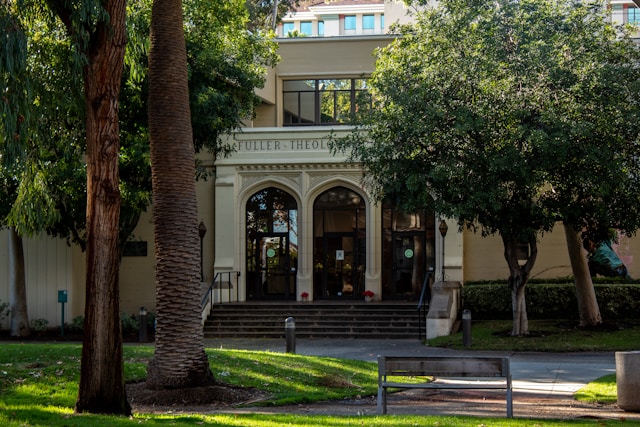
People tried to tell me about seminary. I even heard pastors jokingly refer to it as “cemetery.” Looking back, I’m not sure if they were actually joking, or if it was one of those “laugh to keep from crying” situations. But I’d been warned: seminary wouldn’t be gentle on my faith. Those warnings did not land. Because I’m hard-headed. I remember the day I found out the hard way.
“God does not have an autograph.”
“There are no recordings of God.”
I ain’t know if my biblical studies professor was saved after I heard him say that. It didn’t matter though. I couldn’t spot a lie in what he said. I’d never seen God’s handwriting. The urban philosopher Pusha T once autographed a bootleg CD for me on a flight we’d both boarded to Miami. I’ve seen his handwriting. I have never seen God’s handwriting.
I’ve heard so many voices over the course of my life. I cannot prove beyond a reasonable doubt that any of them belonged to God. I do not think there is a forensics lab on the planet that can rightly identify the voice of God. And yet, so much of my faith depended on understanding each and every word of the Bible as the very words of God. What was I supposed to do with this faith now that I couldn’t be certain about any of that anymore?
I should’ve listened. Seminary was the worst.
. . .
I am a product of the Black Church. And while I’d never used the word “evangelical” to describe my faith, it is often a fair descriptor of some of the things that I was raised to value. One of those things is the centrality of the Bible. We take the Bible seriously. Though the Bible does not make this claim about itself, a central tenet of our belief is that the Bible is “the word of God.” The Bible does say that all scripture is inspired by God, but the person who wrote those words didn’t have the same Bible we do. The collection of writings we now call “the Bible” was loosely and unofficially defined for the first few centuries after the ink on the last of its pages dried. The Bible wasn’t written as one single book. It is a collection of writings from multiple people, writing to diverse audiences in considerably different contexts.
But it didn’t matter. Where I’m from? Interrogating the Bible was questioning God’s word, and that’s something you just don’t do.
I wasn’t too good at following instructions though. If there was room to ask questions, I was going to ask questions. And if there wasn’t room to ask questions? I’d squeeze them where they didn’t fit. I needed things to make some kinda sense. I found comfort in clarity. But getting there always got me accused of “questioning God’s word.” Jacob got a whole blessing and a brand new name for outright tryna whoop God’s tail in a mixed martial arts match one time (I know that story well—I spent a lot of time in God’s word), but somehow I was out of pocket for having some questions every now and then.
I did not feel welcome where I could not bring my questions.
My questions are a part of me. I think I got it from my father, who never met a convention or expectation he wasn’t willing to question. He was known for carrying a notebook full of graphing paper around, where he’d try to figure some things out and architect new things where the current things didn’t make sense to him. We are two people largely defined by curiosity and wonder. Regardless of how uncomfortable or annoying other people found them to be, all the lessons I’ve learned in life are tied to questions. They show me where my insecurities exist. They guide me through curiosity and into growth. Leaving my questions behind would render me feeling stuck and incomplete.
Eventually, I took me and my questions out into the world. For some reason, people outside the church weren’t as worried about me having questions. In fact, questions were encouraged. I discovered that many of them had the same questions. I’d found decent company among the questioners, and this was a balm to my curious soul.
But my people will always be my people. I still had people in the church. I still had people who walked with the word of God. The word did the talking while they journeyed alongside it, giving silent assent at times and enthusiastic affirmation in others, but still never questioning it. I traversed these two worlds clumsily, blurring the lines between the company of questioners of the word and guardians of the word. There were times I’d forget to check my questions at the door in the company of the guardians. Other times, I would forget to ask enough questions when I was with the questioners.
Things went on this way until I decided to just be me. Being me was at once the easiest and the hardest decision I’d ever make.
Deciding to be me was easy because being me was what I’d always felt led to do. This latent, unfulfilled desire was the source of most of my tensions. It was the force that dragged me against some grains. Being me meant listening to the voice calling me beyond the paths others had decided for me. In many senses, it wasn’t hard at all to stop resisting that voice.
But deciding to be me also felt like a betrayal of my community. I felt as though being me would disappoint some people I deeply cared about. Taking up the space that being my authentic self required seemed like it might leave me all on my own. That was an intimidating prospect.
The me that I decided to be was no longer concerned with how people felt about the case full of questions I carried around with me. The me that I decided to be was fine with the Bible meaning more to me than it did to so many of the questioners. Even as I felt like I was sticking out in whichever company I happened to find myself, I found freedom in being me. I’m glad I made that decision.
. . .
I have a confession to make. The story about my professor telling me about all the admissible evidence—the actual recordings—God was careful enough to avoid leaving behind? That was from my second trip to seminary.
I remember when I made it to seminary the first time. It felt like it’d been a long time coming. But I made it. I was so excited to bring my questions to an actual university setting full of people who took the Bible seriously. Not just “word of God” serious, but also “what do we actually have here in this Bible?” serious. I was determined to be a serious thinker when it came to the Bible, because I’d proven to be a pretty serious thinker in everything else I cared about. My first professor tried to put a dent in that plan.
“What do you all make of the creation account in Genesis 1–2? Should we read that literally? Allegorically? Something else entirely?”
I was so excited. These are the types of questions I’d enrolled in seminary to wrestle with. And so I dove into the discussion with the vigor of a kid on Christmas morning.
My response: There are parts of the Genesis account that seem almost poetic. It’s a wonderful account of the care God took in creating the earth and everything in it. At the same time, some things give me pause. If the sun wasn’t visible until the fourth day of creation, then how were day and evening measured the first three days? Perhaps literal, twenty-four-hour days are not the main idea here. Is it any less impressive if God created the world over six million years instead of just six days? How much time would it take you to create something comparable?
I felt freer than I’d felt in a while as I shared these thoughts. I felt free because I was among all of my people. We were treating the Bible as the word of God, and we were having discussions about it. I got to bring my questions into a classroom with the guardians of the word! Freedom had finally led me to a place where I was comfortable. I felt like I fit here.
And I felt that way until my professor responded to these questions of mine. He accused me of hedging. Of lacking conviction. It was deflating. I replied to the question because I thought I’d found a space where I could grow. Instead, I found a space where part of me would need to suffocate another part of me if I had any hope of surviving. I recognized that I’d invested time and money in receiving an education that would not make room for my questions. I could’ve stuck to church for that.
Excerpted with permission from Theologizing Bigger: Homilies on Living Freely and Loving Wholly by Trey Ferguson.
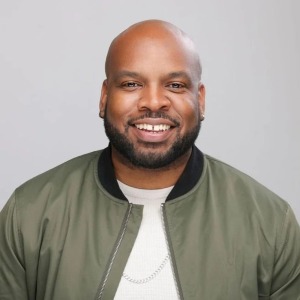
Trey Ferguson is a minister, writer, and speaker, with an MDiv from the Samuel DeWitt Proctor School of Theology at Virginia Union University. His thoughts on faith in an evolving world can be found on the Three Black Men: Theology, Culture, and the World around Us and New Living Treyslation podcasts, in The Son Do Move newsletter, and @pastortrey05 on social media. He lives in South Florida with his wife and three children. Learn more at pastortrey05.com.