A dispatch from the Festival of Faith and Writing, and questions about the absence of the big 5 Christian publishers.
We’re just back from the Festival of Faith and Writing at Calvin University in Grand Rapids, and we’re still processing.
But it was good. Maybe you heard.
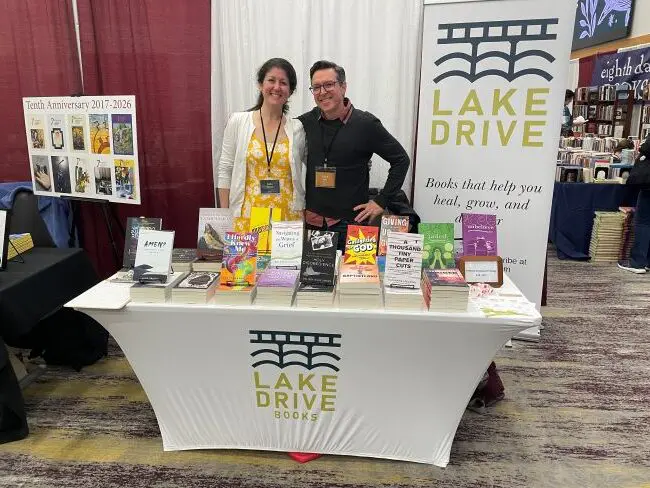
Most writer conferences buzz with pitch anxiety, business cards crammed in your pocket, and a vague sense that you didn’t schmooze hard enough. In contrast, the Festival of Faith and Writing leaves you up at night replaying conversations—real ones about ideas, books, and why any of this matters in the first place. David literally couldn’t sleep (though that may have had something to do with the stress of being an exhibitor and coordinating staffing for his Lake Drive Books book table). Mick was there a couple of mornings and spoke to several attendees and fellow book nerds, and actually enjoyed himself.
But something else made this conference so different.
For those who don’t know it: the Festival has been running since the 1990s out of Calvin University’s English department. It’s held every other year and has drawn some of the very best writers—John Updike, Marilynne Robinson, Edwidge Danticat, Salman Rushdie, Maya Angelou. This year featured Robin Wall Kimmerer, Ross Gay, Laurie Halse Anderson, and Barbara Brown Taylor. Obviously, not “Christian market” authors in any tidy commercial sense, but folks who take words more seriously than big Christian publishers tend to—yeah, we said it—and which we think may be the point. More on that below.
It’s not a conference for pitching manuscripts, per se. It’s more of a place to share your love of books with other bookish types who dig the kind of literature that a certain brand of culture-war Christianity doesn’t seem to jibe with.
A Noticeable Absence
While the workshops were primarily from traditionally published Christian authors, what struck us as we walked the exhibit hall was that none of the major evangelical publishers were there this year. We spotted NavPress, IVP, Eerdmans, and Kregel. But no Waterbrook. No Thomas Nelson. Not even Zondervan, which is local. Tyndale sent editors (of which Nav is technically an imprint), as did some others, but none of the big 5 chose to exhibit or officially sponsor.
Privately-owned local big publisher Baker (Brazos) was there, and progressive mainline houses Broadleaf and Herald Books. A few other smaller houses were present—some doing extraordinary work with poetry and even literary fiction, clearly not there to profit, in the financial sense, and clearly not caring. And seeing their commitment was genuinely moving.
But the big players? Absent. Which, we think, is telling.
The companies you might think have the biggest vested interest and the resources to send a team did not. They could collect new readers, increase brand recognition, make key connections, or simply show up for faith-focused literary culture, the very culture many assume they draw readers from. Instead, they stayed home. And their absence suggests a question: is this gathering not valuable to them?
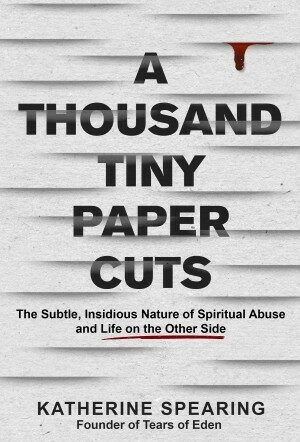
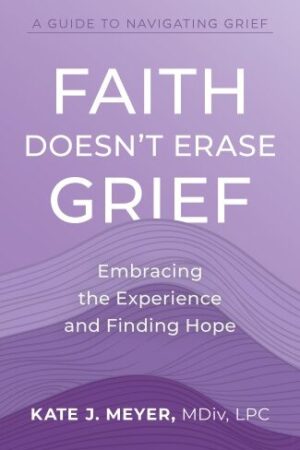
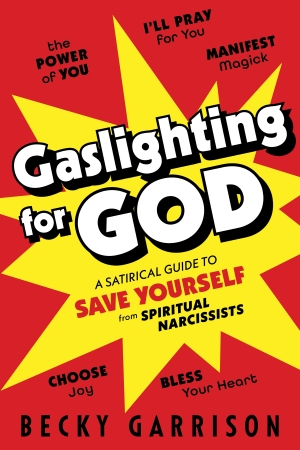
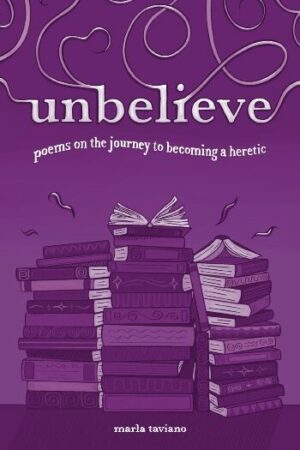
Granted, such higher-minded literary community isn’t their audience. But is it truly not profitable enough to support the larger mission of faith-based literature? Indie retailer Eighth Day Books brought in a huge selection of recent and backlist titles, so clearly, they were adding to their bottom line. Maybe the Festival doesn’t move units like the old ICRS convention, which was where new retail deals were struck before the internet. But that’s not what this is meant for. It’s quiet, contemplative, and maybe that’s why it was so conducive to conversations about deconstruction, spiritual memoir, religious trauma, and trans & queer stories, all of which were front and center on the Lake Drive table.
This Bittersweet Problem
There’s an invasive vine called Asian bittersweet that grows behind David’s house. Left unchecked, it girdles trees, wraps around them, cuts off their sap, and kills them. Every year he spends some time digging it out, bit by bit. Not super glamorous. But where it’s been cleared out, other things can grow again.
There’s an invasive species called mass culture currently taking over much of America, and evangelical publishing isn’t checking it. From our perspective, if anything, most of the top houses are actively helping it along. They don’t necessarily mean to kill what’s distinctive. It’s just a byproduct of their irrefutable agenda to win at any cost. None but the most hardcore Christian nationalists actually want a monoculture (though just let someone try to take away their Mexican food). Yet apparently the big publishers who buy up imprints apparently didn’t think they could serve their bottom line (or affirm the statement that diverse viewpoints are welcome and important?). We know how risk-averse their business and theology are. The distinctions between the top publishers are largely cosmetic and decorative.
This Festival of Faith and Writing can offer something different: a clearing. A place where thinkers, deconstructors, doubters, and literary weirdos can show up and belong; find out there’s a preexistent heritage of book people who read carefully, slowly, and see prejudice (“pre-judging”) as inimical to authentic faith.
Read enough books and you find many people are living honestly, if not always comfortably, in very real tension.
Is Something New or Old Emerging?
In her closing talk, Barbara Brown Taylor shared how words are currently being devalued. As one of the first writers to publicly wrestle with leaving the institutional church (her book Leaving Church came out over twenty years ago), she’s uniquely poised to characterize our modern moment. What is lost when language itself has become so devalued? She reminded the audience full of readers and writers what Helen Keller found at the water pump, that moment when a word sprang into being and finally fused with meaning for her, breaking something new into the world.
That’s what a gathering like this can do at its best. It can remind you why you’re really here.
If something is finally, genuinely taking shape in this shifting landscape, maybe it would be most noticeable at such a rare, faith-friendly literary conference. The conversation about deconstruction, religious trauma, and a more equitable “big table” is being heard, and not just heard, but invited, at least at one of the better-known Christian writers conferences. Is talking about things many Christians find dangerous becoming less fringe and frightening? Depends where, when, and who you ask. But it’s being named, shared, and welcomed by some people. And they’re finding each other.
The big publishers will only notice if it gains more popularity. Then they’ll return, buy it, package it, and resell it to us.
Until then, long live the FFW.
Republished from Publishing Disrupted with permission (c) 2026 by Mick Silva and David Morris. Photo of Amen? author Julia Rocchi and editor and Publishing Disrupted podcast co-host Mick Silva at the FFW 2026.