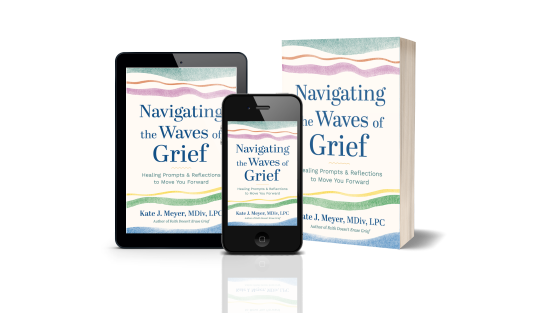
As a publisher at Lake Drive Books, I have the privilege of working with authors who don’t just write for the sake of words on a page, but who write to help people heal, grow, and discover. Every so often, I come across a project that feels especially timely, deeply human, and much needed. Kate J. Meyer’s new book, Navigating the Waves of Grief: Healing Prompts and Reflections to Move You Forward, is exactly that kind of book.
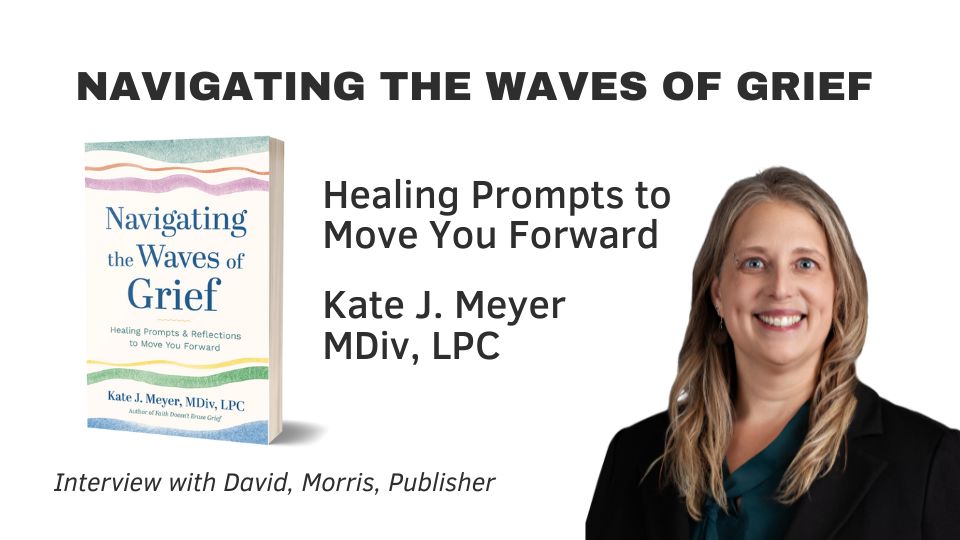
I recently sat down with Kate for a video conversation about this project. We spoke about her work as a grief counselor and why she felt compelled to create not just another book about grief, but a hands-on guidebook designed for real healing. Here's a few key themes that stood out to me—and why I believe this book is such a necessary resource.
Reading Isn’t Enough: The Trap of “Positive Avoidance”
Kate introduced me to a concept she calls “positive avoidance.” It’s the tendency we all have to surround ourselves with information—stacking our shelves with self-help books, attending workshops, listening to podcasts—without ever actually doing the hard inner work those resources point toward.
As a publisher, I see this all the time. Readers love to learn, but when it comes to grief, knowledge alone isn’t enough. You can underline every sentence in a book and still never face the raw emotions of loss. Kate told me that her earlier book, Faith Doesn’t Erase Grief, was about providing information and insight. But with Navigating the Waves of Grief, she wanted to take the next step: helping readers personalize that insight, engage with it, and practice it.
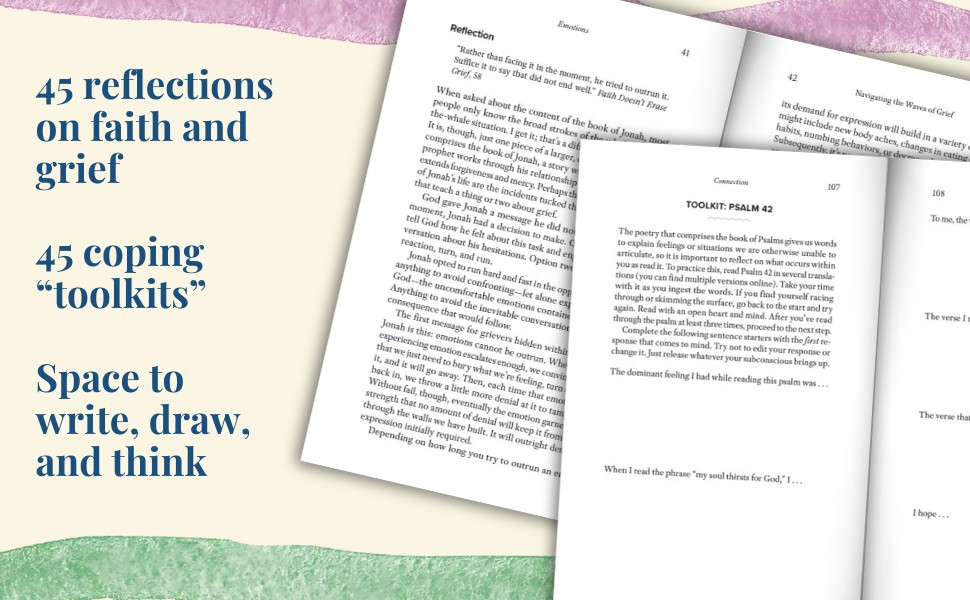
That’s why this book includes writing prompts, reflection questions, and creative exercises. It’s not just something to read—it’s something to do. And that “doing” makes the difference.
The Waves of Grief
I am especially moved by Kate’s metaphor of grief as waves. Sometimes grief crashes in on us relentlessly, like a storm that won’t end. At other times, the waters are calm, until suddenly another wave slams us unexpectedly.
This image rings true for anyone who has ever lost someone or something dear. The waves don’t disappear, but their intensity changes over time. Kate’s book helps readers accept the reality of those waves while equipping them with tools to navigate them. That’s an important distinction: the goal is not to erase grief but to build the resilience and practices that help us survive and grow through it.
Why Adults Struggle with Emotion
One of Kate’s sharpest insights is that adults are often out of touch with their emotions. Somewhere along the way, many of us learned to suppress sadness, hide anger, or avoid fear. We may have been told those feelings were “too much” or even “unspiritual.”
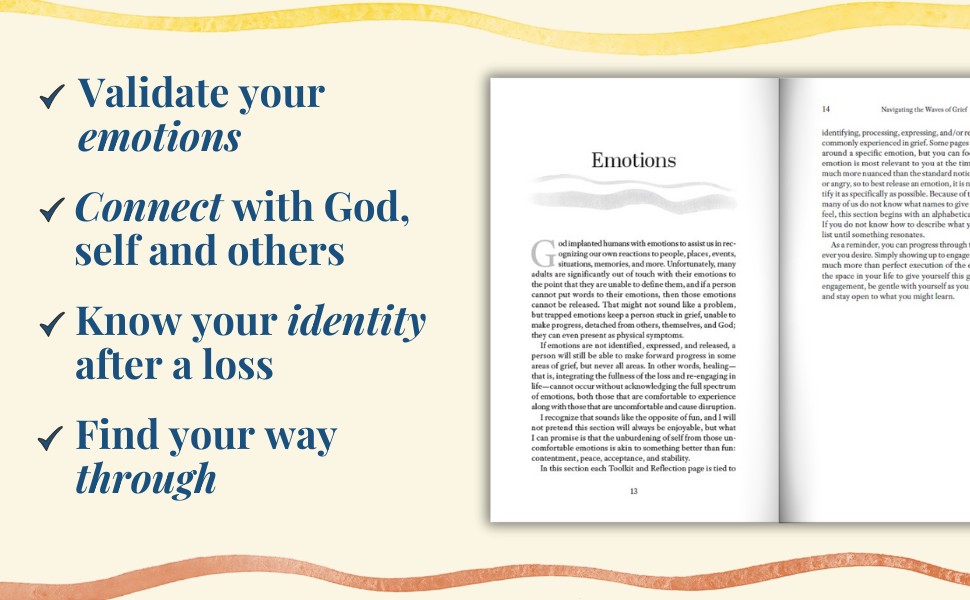
Grief, however, doesn’t play by those rules. It forces us into emotional territory we can’t ignore. Kate organizes her book around four key dimensions—emotions, connection, identity, and the movement through grief—because she knows that grief is holistic. It affects not only how we feel but also how we relate to others, how we see ourselves, and how we imagine our future.
By inviting readers to journal, draw, or simply sit with their emotions, Kate gives us permission to reconnect with parts of ourselves we may have neglected for years.
Everyone Has Grief Work to Do
Something I admire about Kate’s approach is her insistence that grief is not limited to death. Loss comes in many forms: the end of a relationship, a shift in identity, the loss of health, or even dreams that never came to pass.
Because of this, everyone has grief work to do. And yet, our culture rarely encourages us to do that work. Too often, we skip over pain, distract ourselves with busyness, or settle for quick platitudes.
This book offers an alternative. With reflections and practical exercises, Kate provides tangible ways to enter into grief and keep working with it. Some practices are as simple as using your senses to ground yourself in a difficult moment. Others involve creative expression, reflecting on scripture, or guided free association. The point isn’t which exercise you choose—it’s that you choose to engage at all.
That's why Kate designed this book as a guide you can return to again and again. Mark pages. Write in the margins. Return to exercises when another wave of grief comes. Healing is not linear, and this book is not meant for one-time use.
My Invitation to You
When I think back on my conversation with Kate, what stays with me is her deep conviction that grief requires work—and that this work, while difficult, is worth doing. Navigating the Waves of Grief is more than a book; it’s an opportunity.
So my invitation to you is simple: Don’t just read about grief. Don’t just underline the words. Take the book in your hands, write in it, wrestle with it, return to it. Let it become part of your healing journey.
Grateful for you,
David Morris, Publisher, Lake Drive Books