
When we think of grief, many of us picture the widely known "five stages of grief" framework: denial, anger, bargaining, depression, and acceptance. While this model offers structure, it gets a little complicated for the average person and can feel a little too rigid. Grief is anything but predictable, and trying to fit your unique experience into a checklist may leave you feeling more lost than understood. That’s why I prefer to explore grief through three broader phases: early grief, middle grief, and lasting grief.
This approach, which I discuss in much more detail in my book Faith Doesn't Erase Grief, reflects the natural flow of how grief evolves, offering space for the messiness and unpredictability of our journeys. It acknowledges that grief is personal and doesn’t operate on a strict timeline. Let me walk you through these phases, not as a roadmap to follow but as a companion to help you better understand your experience.
Early Grief: The Raw Beginnings
Early grief feels like standing in the aftermath of a devastating storm. Everything familiar is gone or unrecognizable, leaving you overwhelmed, disoriented, and emotionally shattered. In this phase, the weight of the loss is immense, and it can feel like all the oxygen has been sucked out of the room. Basic tasks, like eating, showering, or even getting out of bed, might feel insurmountable.
In these early days and weeks, shock often acts as a buffer. It’s the body’s way of saying, “Let me protect you from feeling all of this at once.” You might feel numb, as if you’re moving through life in a fog. There are waves of sharp, intense emotions—sadness, disbelief, anger, or guilt—that crash over you without warning. Some people describe feeling like they’re drowning in their own sorrow.
Here’s the most important thing to know about early grief: it’s not about thriving—it’s about surviving. If all you do in a day is breathe, that’s enough. There’s no timeline for “getting better,” and you’re not failing if you can’t manage more than the basics. Lean on those around you for support, let others help with practical tasks, and don’t try to force yourself to be “strong.” Strength in grief isn’t about holding it all together—it’s about allowing yourself to feel and express your pain.
Middle Grief: A Marathon of Change
The transition to middle grief is subtle. You don’t wake up one day and declare, “Early grief is over!” Instead, it sneaks up on you. Perhaps you notice that the intense, all-consuming pain begins to ebb, leaving room for fleeting moments of normalcy or even hope. Middle grief is often described as a marathon. It’s where the hard, slow work of healing begins.
In this phase, you start to adapt to your new reality. It’s not about “moving on” from your loved one, but about learning how to live without their physical presence. You might find yourself sorting through their belongings or creating rituals to honor their memory. Memories of your loved one become more balanced—no longer dominated solely by the pain of their absence but expanding to include moments of joy, love, and gratitude.
Middle grief is deeply emotional and often unpredictable. Some days, you might feel like you’re making progress, while others feel like you’ve been pulled back to square one. That’s normal. Grief isn’t linear; it loops and spirals. What matters is not how quickly you move through it, but that you allow yourself to engage with it authentically. Healing isn’t about erasing pain—it’s about learning to carry it in a way that doesn’t overwhelm you.
During middle grief, it’s also common to reevaluate relationships and priorities. Grief changes us, often in profound ways. You may find yourself drawing closer to some people while distancing from others who don’t understand or validate your pain. You might also explore new hobbies or practices that bring you peace, whether that’s journaling, walking in nature, or connecting with a support group. These acts of self-care are not only therapeutic but also an essential part of integrating your grief into your life.
Lasting Grief: Settling In
Lasting grief isn’t about “getting over it.” That’s a myth society loves to perpetuate, but it’s neither realistic nor kind. Instead, lasting grief is about integrating the loss into your life in a way that feels manageable and meaningful. It’s the phase where grief transitions from being an all-consuming presence to becoming a part of your story—a piece of who you are.
By the time you reach lasting grief, the sharp edges of pain have softened. The grief ball, which was once enormous and unwieldy as you felt it rolling around inside you, has shrunk to a size you can hold in your pocket. It’s always there, but it no longer dominates your every thought. You have more control over when and how you engage with it. You might find yourself reflecting on your loved one with a bittersweet smile rather than tears, or sharing their stories as a way to keep their memory alive.
A renewed sense of purpose often accompanies this phase. You begin to dream again, set goals, and find joy in the present moment. This doesn’t mean you’ve “moved on” or forgotten your loved one. In fact, many people find ways to maintain an ongoing bond with the person they lost, whether that’s through cherished rituals, symbolic acts, or simply carrying a memory in your heart.
Lasting grief isn’t free of sadness. Anniversaries, birthdays, or unexpected reminders can still bring tears. But these moments are no longer debilitating—they’re part of the ebb and flow of life. In lasting grief, you’ve learned to embrace both the sorrow of loss and the beauty of love, finding a balance that allows you to move forward while honoring the past.
The Journey is Yours
Grief is as unique as a fingerprint, shaped by your personality, your relationship with the person or relationship you lost, and the circumstances of the loss. There’s no right or wrong way to grieve, and no timetable for when you should feel a certain way. Whether you’re in the depths of early grief, navigating the complexities of middle grief, or settling into the rhythms of lasting grief, your experience is valid and worthy of compassion.
Each phase builds upon the last, and each teaches us something valuable. Early grief reminds us of the depth of our love, middle grief shows us the strength of our resilience, and lasting grief reveals the enduring connection we carry with those we’ve lost. Wherever you are in your journey, know that you’re exactly where you need to be—and you are not alone.
Photo of flower by Anthony

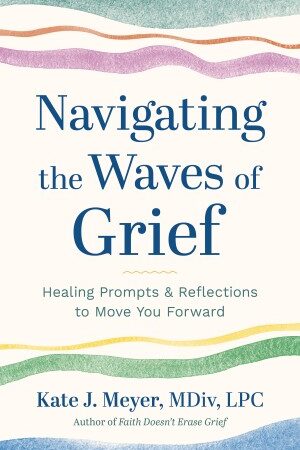
Kate J. Meyer, MDiv, LPC, is an ordained minister and licensed professional counselor who has worked in both private practice and hospice care. She is passionate about bringing grief into the light so that all grievers know how to move forward in a healthy, life-giving manner. Kate is the author of Faith Doesn’t Erase Grief, Navigating the Waves of Grief, Navigating the Waves of Grief: Healing Prompts and Reflections to Move You Forward, and The Red Couch and The Yellow Dress, two novels about past mistakes and a challenge to overcome them. She is a dog mom living with her husband in Western Michigan.