
Buy Here: Bookshop | Amazon | Lake Drive Direct | Barnes & Noble | BooksAMillion
This Little Light
Beyond a Baptist Preacher Predator and His Gang
Christa Brown
Contents
Introduction
Part One: A Church Girl
The Minister’s Mustang
Family Troubles
Moving In on the Prey
Obsession
With God as a Weapon
Following the Rules
Still a Virgin
Satan’s Ally
Going to Hell
God’s Biggest Test
The Last Assault
Part Two: A Wife
The Dream
The Voice in the Air-Conditioner
A Stockholm-Syndrome Sort of Bond
Part Three: A Mom
Opening the Box
First SNAP meeting
Dan’s Wail
The Church Threatens Me
Getting Past Their Nose-Thumbing
Seeking a Symbolic Gesture
Substantial Evidence of Abuse
No Help for Counseling
He’s Still a Children’s Minister
Starting to Unravel
Getting Help
Baptist Leaders Cut Off Communication
Getting the Labels Right
Letter to the Church
Cult-like Behavior
Church Leaders Brag
Butterfly on the Run
The Unspeakable
Getting Him Out of Ministry
The Creature on the Couch
At His Florida Church
The Court-ordered Mediation
Part Four: An Activist
The Curse of Knowledge
Reliving It with Debbie
Seeking Clergy Accountability
A Tsunami of Survivors
Baptist Blogs
Kicking the Messengers
Belief Is Gone
The Guru Gets Ugly
The Do-Nothing Denomination
Part Five: A Free Spirit
The Hurt of “God’s Love”
Heart of a Missionary
Epilogue
Introduction
As a kid, I was sexually abused by a Southern Baptist minister in Farmers Branch, Texas. The decision to write a book about it did not come easily. Why in the world would I choose to speak publicly about something so unspeakable?
The answer is because the story goes beyond the personal. The story is about an institutionalized inertia that cloaks evil behind a veil of denial and leaves countless kids at risk.
Southern Baptists are the largest Protestant denomination in the land, and yet they have no denominational system of oversight for their clergy. Even when things go terribly wrong, denominational leaders typically wash their hands of the problem and invoke Baptists’ congregationalist structure. “It’s up to the local church,” they say.
Southern Baptists have no denominational system for responsibly assessing clergy abuse reports or for keeping records on them. They have no system for removing credibly accused clergy child molesters from ministry or for even warning people in the pews. These are dreadful safety gaps for a faith group with 47,000 churches. Clergy predators can exploit the lack of oversight, moving from church to church without anyone tracking them.
The minister who abused me has been publicly named by media and in court documents, but I have not used his real name in this book. “Eddie Dunagan” is a pseudonym. This story isn’t about him. It’s about all the rest of what I encountered in Baptistland. The blind-eyed do-nothingness of the many was far more damaging than the dastardly deeds of the one.
“Eddie Dunagan” has never been convicted of any crime in connection with any of the events described in this book. In all faith groups, most credibly accused clergy child molesters have never been convicted of any crime. This reality is part of why other faith groups have established institutional accountability processes to prevent predatory people from exploiting ministerial trust to prey on kids. But Southern Baptists don’t bother.
I have changed the names of many other people in the book, but they are all actual people. I have not changed the names of most denominational leaders.
If institutional change is to occur, it will happen only when people stop seeing the problem as “a few bad apples” and start seeing how the barrel itself enables the rot.
This is a true account of events as I remember them, but like most people, my memories are imperfect. They have been affected not only by time, but also by trauma. Some of my memories are so unthinkable that they long rendered me mute, but my life has also been marked by immeasurable grace.
I hope that, by sharing my memories, it may help others to reclaim their own memories with a new understanding that the shame does not belong to them. I also hope this book may serve as a tool to help Baptists reforge their faith group into one that fosters clergy accountability.
Update: April 2024
I no longer hold hope that Southern Baptists will ever “reforge their faith group into one that fosters clergy accountability”—at least not in my lifetime. It’s been fifteen years since This Little Light was first published, and sadly, the book remains relevant. Institutionally, the Southern Baptist Convention has changed very little. But what has changed is that many more abuse survivors have become more outspoken.
Thanks to survivors’ voices, there have been more media exposés about SBC clergy sex abuse and coverups. And in 2022, an independent investigatory report validated much of what I wrote in this book—about the do-nothingness of SBC officials and their maltreatment of survivors. Southern Baptists responded by appointing committee after committee, always hyping their “efforts” with platitudes and institutional self-applause. But meaningful reform remains elusive. They bail with a thimble—and make a show of it— while simultaneously swinging a sledgehammer to knock gaping holes in the boat. (For more on how the SBC has dealt with clergy sex abuse in the fifteen years since This Little Light was first published, check out my new book, Baptistland.)
Though I no longer hold hope for institutional reform within the SBC, I do hold continuing hope in the cumulative power of survivors’ voices. Survivors bring truth to light, and truth stands as a moral force in the universe. Whenever the truth is told about what is, the light expands to illumine what should be.
A Church Girl
I am alone
my shadow runs back into me to hide and there is not room for both of us and the dread.
W.S. Merwin, “Second Psalm: The Signals”
Chapter 1: The Minister’s Mustang
After church, we would pile into the minister’s Mustang. It was a ’66 stick-shift, and one of us always had to sit in the middle and scrunch up our knees in between the bucket-seats. He would crack a joke about how he was going to put his stick between our legs.
We giggled. All of us. None of us ever knew what to say. He was the minister, and we were just giggly girls.
I think that’s how it started.
I look back and see how lurid that was. But as kids, we didn’t see it. If anything, we felt cool.
None of us smoked. None of us drank. We were church kids. So what we did to feel cool was pile in the car with the minister and laugh at his jokes. In hindsight, cigarettes and alcohol would have been a lot safer.
On my 16th birthday, I babysat all day for the Ganzer kids, and when their mom got home, I headed over to the church parsonage on my bike. Eddie Dunagan, the youth and education minister, had invited a bunch of girls from the church to a sort of impromptu birthday party. I was excited. The last time anyone gave me a birthday party was when I was seven.
I stopped off at Gussie Field park on the way. It was just a few blocks from the parsonage, and I had a long-standing bond with a tree there. Several years earlier, I had promised I would climb that tree every year on my birthday. . . . forever and ever. So I stopped off , climbed up, and soaked in the sound of the woods. Then I went on over to the parsonage.
It wasn’t much of a party. There wasn’t any cake, and we didn’t play croquet like Eddie said we would. Instead, he brought out a football. Over and over again, I wound up face down on the ground with Eddie on top of me. He was about 8 inches taller than me, and weighed a lot more, but somehow he couldn’t manage to just pull the fl ag. It felt awful. He was all over me and always slow getting off me. But I didn’t want to be a wuss. Besides, everyone else seemed to be having a good time. I didn’t want to whine.
Is that when I became prey? Is that when it started?
I look back and search my memories, but I still can’t quite fi gure out exactly when it started.
The kids in the youth group used to play Twister. Though he was older and bigger, Eddie often played too. Somehow, every time my turn came, Eddie would step in, and the next thing I knew, he would be all over me. Maybe that’s when it started. Maybe that’s when I went from being just a church-kid to being sexual prey. But of course, it was just a game.
Maybe it started when I used to practice the piano in the sanctuary. He started coming in to talk to me. I didn’t really mind, but it made it hard to get in my practice time. Besides, the reason I liked playing in the sanctuary was because I liked the solitude and the full whole roundness of the sound going into the stillness. So after a while, I just quit practicing at the church as much.
Maybe it started on Easter Sunday when I was 15. I didn’t have a new Easter dress like other girls, but I put together my sister’s white skirt with a red, white and blue top. It was an outfit that looked more like the Fourth of July than Easter, but at least I had some new shoes.
It was the first time I ever wore high heels, and I was wobbly. Eddie laughed. “You’ll learn,” he said. Then he told me how good I looked and how he really liked what high heels did for a woman’s legs. I blushed. But I was so embarrassed about not having an Easter dress that I was mostly just glad that anyone had even noticed me.
Maybe it started when my dad had back surgery. Eddie offered to let my sisters and me sleep at his house while my mom stayed overnight at the hospital. Three of us slept in a double bed with my youngest sister in the middle. Did he leer at me while I slept? Or worse?
Was there ever anything at that church that was just good and clean and wholesome? Or was every bit of it some piece of the minister’s set up for sexual abuse?
Every memory I have is tainted – every Sunday School class, every retreat, every Bible drill, every camp-out, every mission trip, every choir trip, every revival, every Vacation Bible School, every prayer group, every ping-pong game – all of it.
Chapter 2: Family Troubles
It was another day of curses and yelling, of sending us all to hell and calling us every name in the book, and of teaching us all a lesson. Who knows what started it? Maybe he couldn’t find the TV guide.
I was trying to drown it all out with some Rachmaninoff . Things had gotten a lot worse since my dad’s back surgery. It didn’t go well, and he was constantly popping pain pills. He couldn’t sleep much. Even when he did, his combat nightmares kept all the rest of us awake. Worst of all, he hadn’t been able to go back to work. For my dad, that was like a death sentence.
Over the sound of my piano pounding, I could tell this one was going to be bad. Why couldn’t Sarah just keep her mouth shut? She was living back at home with us while Ronnie was in Viet Nam, and since she was a married woman now, she seemed to think she could yell back at Dad.
But Sarah was screaming, not yelling. Mom was screaming too. Dad was growling.
I stopped my piano pounding and looked in the den.
Dad had one elbow locked around Sarah’s neck. He was choking her. Sarah had stopped screaming and her face was turning red. Mom and Jane were trying to pull Dad off. Faye was cowering in the corner.
Frozen in place, I took in the scene. Then suddenly, I did the unthinkable. I ran to the phone in the back bedroom and I called the police. There must have been a thousand fights under our family’s roof, and no one had ever before called the police. Even as I did it, I couldn’t believe I was doing it. It was a sort of out-of-body experience, with one part of me dialing the phone while the other part watched, saying “You’ll be in trouble now.”
I stepped back to the edge of the den and yelled that the police were on the way. Dad let go and skulked back to his bedroom. Sarah took a deep breath. All of them looked at me like I must be crazy. By the time the police arrived, things seemed calm. No one had much to say, including me. By then, we were all in our usual mental mode of wanting to pretend it never happened.
The police didn’t make much effort to sort it out. They asked which church we went to. When we told them First Baptist, they called up our pastor, Brother Hayden.
He came right over and set right to work praying for us. Then Brother Hayden sat at our kitchen table and talked about what a fi ne Christian family we were and about what an example we set in the community.
“Think about others,” he said. “Think about how they’ll feel if they learn that the police were called to a family like yours.” He looked straight at me when he said it.
I was stunned. My father was choking my sister, and I’m supposed to worry about what people will think?
But he was our pastor. His glare made me shrink in my chair. Why in the world did I pick up that phone?
Brother Hayden said we shouldn’t talk about it, and he promised he wouldn’t tell anyone about it either. He admonished us to pray and to take care of our family problems privately. “That’s the biblical, right way,” he said.
He told my mom that she should try harder to be a good helpmate for my dad, to not make him angry, and to support him. My mom was still crying, and she didn’t say much. None of us did. We just listened to Brother Hayden, and when he was done praying and talking, we thanked him.
A couple hours later, I left to go to the church for my piano lesson. We all acted as though nothing had happened. In my family, it just got lumped in with all the rest of the big pile of stuff we never talked about.
Chapter 3: Moving In on the Prey
“I heard the police were at your house, Christa.”
It was Eddie Dunagan, the youth and education minister. I had just finished my piano lesson and was getting a drink at the water fountain in the back of the sanctuary when he came up behind me. I managed to swallow without choking, but I didn’t know what to say. I knew it was wrong of me to have called the police.
Eddie said he wanted to talk to me and told me to come into his office.
I sat there and started bawling. I had never talked about my Dad’s temper with anyone, not even my closest friends. But Eddie asked questions, and I answered them, and he seemed to care. In some ways, it was a relief to talk about things.
Eddie said he wanted me to come talk with him every Sunday, in between my piano lesson and the start of choir practice. But he said not to tell anyone. “It would probably just make your parents mad if they knew you were talking about them.”
That made perfect sense to me. Besides, I wouldn't have told my parents anyway. They had way too many other problems than to worry about me.
Weeks went by. I liked the attention, and I began to feel more and more comfortable with Eddie.
After church youth events, he started taking me home last. He would drive around in the dark and talk about all sorts of things. Mostly I just listened while he talked about what great things he was going to do for God. But sometimes he veered onto other topics.
Once he told me I reminded him of Barbarella.
Then he showed me a picture of the movie poster with Jane Fonda. I didn’t know what to say. I just giggled.
“Did you go to see this?” I asked. “I mean . . . what kind of movie is it?”
He looked at me and laughed. “It’s about sex in space, and it’s a really good movie.”
Even in the dark, I’m sure he saw me blushing because then he started lecturing me about how sex was a gift from God.
“There’s no need for you to get all nervous about it.”
But I was nervous. That was probably the first time I had ever heard the word “sex” spoken out loud, except for during health class at school.
After that, he started reading to me sometimes from the Song of Solomon. He told me that I too had “doves’ eyes,” and a neck like “a tower of ivory.”
When he started talking about “breasts like clusters of grapes,” I was embarrassed to even hear the word “breasts” spoken out loud. But I didn’t know what to think. After all, it was in the Bible. It was God’s word.
Buy Here: Bookshop | Amazon | Lake Drive Direct | Barnes & Noble | BooksAMillion
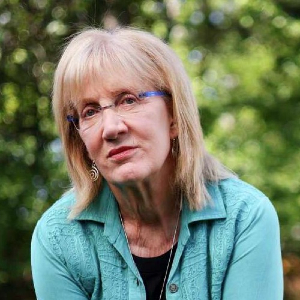
Named as one of the “top 10 religion newsmakers” of 2022, Christa Brown has persisted for two decades in working to peel back the truth about clergy sex abuse and coverups in the nation’s largest Protestant denomination, the Southern Baptist Convention. As one of the first to go public with substantiated child molestation allegations against a Baptist minister—and documentation that others knew—she has consistently demanded reforms to make other kids and congregants safer. Brown has been featured in The Houston Chronicle, Vice, writes for Baptist News Global, and has had numerous mentions in national media. She's the author of Baptistland: A Memoir of Abuse, Betrayal, and Transformation and This Little Light: Beyond a Baptist Preacher Predator and His Gang, a retired appellate attorney, a mom, and a grandma. She lives with her husband in Colorado.

Contact
[email protected]
6757 Cascade Road SE, #162
Grand Rapids, MI 49546

As an Amazon Associate and Bookshop.org Affiliate, Lake Drive Books earns from qualifying purchases.