
Buy Here: Amazon | Barnes and Noble | Bookshop.org | Booksamillion | Apple eBooks | Kobo
The Future of an Illusion
Introduction and Annotations on Freud’s Enduring Critique of Religion by David R. Morris, PhD
Sigmund Freud
Introduction and Annotations by David R. Morris, PhD
Contents
Introduction: Freud’s Enduring Critique of Religion
Chapter 1
Chapter 2
Chapter 3
Chapter 4
Chapter 5
Chapter 6
Chapter 7
Chapter 8
Chapter 9
Chapter 10
About Sigmund Freud
About David R. Morris
Introduction: Freud’s Enduring Critique of Religion
Of all the courses one can take as a psychology major in college, I loved the history of psychology. There was something about those early pioneers. From Ivan Pavlov to the founder of American behaviorism, J. B. Watson, and from William James and the early psychoanalysts to the proliferation of personality theories, developmental theories, and psychotherapies, the discipline of psychology has been innovative in human history. Reflecting back, I now know that psychology represented more than just learning a trade; it meant personal growth too, not just in the sense of a liberal arts education or healing to become a professional healer, but a way to see structure and meaning for someone who had grown up in a religious culture that considered itself life’s final authority. Psychology, for me, was an antidote.
I wanted more, so some years later, in the early 1990s, I found myself in graduate school in New Jersey, joining a group of fellow doctoral candidates and seminarians to read certain applications of psychology to religion, including The Future of an Illusion, a book published just over sixty years earlier by the single best-known pioneer in psychology, Sigmund Freud. The prospect filled me with anticipation. Instead of reading about historical psychological theory proper, however, we were studying its application to religious life.
What should a suburban white evangelical pastor’s kid in the United States expect when entering a careful reading by an author so different than him? What knowledge would he learn, and could he reasonably absorb it? When Freud created this work, he was a bourgeois Jewish neurologist living and working in a multilevel apartment at Berggasse 19, Vienna, Austria, in the 1920s. Thinking back on that graduate seminar, I remember how, like reading William James, these early psychologists loved elaborate discussions. The prose of The Future of an Illusion takes its time and loves to meander, unlike the dry, exacting psychology textbooks of American undergraduate studies. The writing felt arcane and strange, as if an extraterrestrial had found itself in a Sherlock Holmes novel, complete with all its scene-setting accoutrements. Reading this book is like listening to Freud in a smoke-filled lecture hall, delivering a monologue influenced by turn-of-the-century Vienna café culture in which conversation partners were physicians, academics, artists, and maybe some merchants.
With this sense of venturing into an unknown past, I started reading, but not without questions. How do any of us incorporate and situate a psychologist who has had such an influence on Western culture and society? Do we really know this person, or do we know someone who instead has become a cultural construction for us? Indeed, Sigmund Freud makes for a great caricature: the stubby gray beard, the round spectacles, the woolly suit, the iconic cigar, and the Austrian accent (though there are few recordings of Freud’s voice). Even the Freud Museum in London, an esteemed institution in Freud’s post-Nazi, post-Austria home, sells a Freud doll. Making Freud seem even more outsized, his personality theories can seem fantastical at first glance. He is infamously known for making sexual desire the starting point for human development, psychological functioning, and relationships. His Oedipus complex idea, that a boy desires his mother and that this desire is thwarted by the presence of a father who evokes murderous aggression in the boy, creates quite a vivid image. Things only seem to become more strained and exaggerated as he applies the theory to girls and women. Caricatures, however, remain just that—caricatures. They embellish features to amuse the eye or the mind but capture only a portion of the whole human being.
Few figures have entered our popular imagination more potently than Sigmund Freud, but what sets him apart is how he makes the perfect foil, so much so that caricatured references to him are precisely the kind of projection and resistance to self-awareness he highlighted. It happens all the time. When I encounter non-psychological writers who mention Freud, especially American evangelical Christian authors, whether learned or lay, the caricatures lose any artistry and become base hyperbole, even bigotry. Remember, Freud was Jewish, raised by a devout father who gave him a Hebrew Bible, and he lived in an Austria that blamed Jews for its troubles. Jokes and jabs at Freud can take on an antisemitic undertone. What many see as a comparably more positive valuation of religion in the work of Christian preacher’s kid Carl Jung, for example, often overlooks Freud’s unsparing stance that religion involves far more than what we profess. Go ahead, critique Freud—by his own admission, he knew he couldn’t have figured it all out—but be careful you’re not turning him into something he’s not.
In the span of intellectual history, Freud ranks alongside Karl Marx, Friedrich Nietzsche, Max Weber, Émile Durkheim, and others who have shaped our understanding of the world. In the field of psychology, there is no equal. The idea of the unconscious, that there is an active, palpable, even subversive life of the mind of which we are consistently unaware, is permanently embedded not only in general psychological theory but also in everyday language, as well as other forms of criticism. Expressions like repression and libido, defense mechanisms such as projection, and the “Freudian slip” are part of our common knowledge.
Back to the caricature and the application to religion. Why would anyone listen to a psychologist, especially someone who invented the strange theories of psychoanalytic psychology, on matters of religion? Isn’t religion more about theology, that is, articulating ideas about sacredness? Or is religion better understood as sociological data, a who’s who of religion today? Or is it best understood historically, as a way of discerning differences and similarities between the past and present? While the professional guilds around these views of religion raise their voices, the role of human motivation is often the last, most dismissed, and most neglected perspective. Although arguments for a more precise theology, a broader sociology, or a clearer history are all helpful, they are not enough.
Why, for example, would American evangelical Christians overwhelmingly support a religiously illiterate, billionaire presidential candidate three times, even though he has incited an angry mob to attack the US Capitol, started a needless war, and is a convicted felon and sex abuser who mocks and bullies women, disabled people, and people of color? In our current time, we’ve likely never quite seen such a disparity and dissociation between professed values of those who call themselves Christians and their loyal support of such a figure. Why would people train their children in values like mutual love and respect, and then act as though character doesn’t matter and politicians are excused from morality? We must ask about the deeper issues at stake. What are we missing? What fog must we still cut through to benefit from theological, sociological, and historical analysis? What might equip us to better understand and confront the phenomenon we face?
We need more depth. We need a psychological analysis, perhaps the most demanding analysis of all, because it asks us to question ourselves, to pause and consider the ongoing, indefatigable power of our own motivations, emotions, and self-interests. The fog we encounter contains elaborate frameworks, repressive narratives, and shared artifices that belie and produce the very phenomena psychological disciplines put under the microscope. The fog gets thicker when we realize, like Freud did, that our religious culture might be the most self-deceptive aspect, as well as the most sensitive and most protected from criticism. By including Freud’s critiques of religion, we add strength and honesty that counters what he called the “return of the repressed,” the ongoing illusory nature of self-interest. By asking more penetrating questions, we can at least become less shocked by all that we see currently, knowing that there is more going on than a faulty theology or an obvious ignorance of injustice. Even today, we can turn to Freud to help us understand the unequaled ubiquity of religion in the US and its complicity with the contemporary political and cultural authoritarianism we see.
For those deconstructing exploitative religion and spirituality, Freud’s iconoclasm and his notions that we unconsciously use religion to satisfy our deepest and sometimes darkest wishes, create illusions about ourselves, or condition ourselves to unexamined social conformity, serve as an indispensable resource and touchstone.
Buy Here: Amazon | Barnes and Noble | Bookshop.org | Booksamillion | Apple eBooks | Kobo
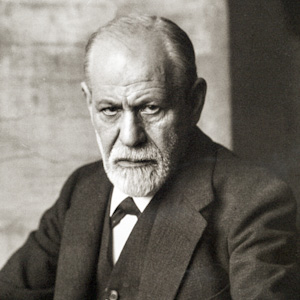
Sigmund Freud (1856–1939) was an Austrian neurologist who founded psychoanalysis, a framework for understanding the unconscious mind and its influence on behavior. He developed influential theories on repression, dreams, and psychological development, including the Oedipus complex. His major works, such as The Interpretation of Dreams, profoundly shaped psychology. Though controversial, Freud’s ideas continue to inform debates about human motivation, psychotherapy, and cultural criticism.

David Morris, PhD, is a scholar of psychology and religion, and the author of Lost Faith and Wandering Souls. He has served professionally for major national publishing brands and worked with bestselling authors and books. He is the co-host of Publishing Disrupted, and the publisher of Lake Drive Books and agent at Hyponymous Literary, two innovative ventures working together to specialize in authors and books that help people heal, grow, and discover. He lives with his wife in Grand Rapids, Michigan, and they have two daughters. Visit davidrmorris.me.

Contact
[email protected]
6757 Cascade Road SE, #162
Grand Rapids, MI 49546

As an Amazon Associate and Bookshop.org Affiliate, Lake Drive Books earns from qualifying purchases.