
Buy Here: Bookshop | Amazon | Lake Drive | Barnes & Noble | Books-A-Million | Audible | Apple | Google Play
Cradled in the Arms of Compassion (excerpt)
A Spiritual Journey from Trauma to Recovery
Frank Rogers Jr.
Contents
Part I
San Mateo, CA—Age 8
Upland, CA—Age 35
Claremont, CA—Age 57
Part II
Presbyterian Seminary, NJ—Age 27
Part III
Foster City, CA—Age 10
Upland, CA—Age 35
Part IV
Whitethorn, CA—Age 36
Claremont, CA—Age 38
Claremont, CA—Age 40
Part V
Claremont, CA—Age 42
Santa Rosa, South San Francisco, and Foster City, CA—Age 43
Upland, CA—Age 46
Part VI
Eureka, CA—Age 46
Claremont, CA—Age 46
Claremont, CA—Age 46–47
Lincoln, OR—Age 50
Part VII
South San Francisco, CA—Age 57
Claremont, CA—Age 57
Claremont, CA—Age 58
Half Moon Bay, CA—Age 60
Afterword: Synthesizing the Journey
Author’s Apology
Acknowledgments
San Mateo, CA—Age 8
Winter 1966
“Is there something in your dream world that is more important than knowing the source of your sin?”
The nearness of her voice snapped me back. Clad in black, Sister Bernard hovered so close to my desk I could feel the ire emanating from her body. My skin burned, shame oozing from every pore. Her finger stabbed the catechism splayed open on my desk.
“What is the sin called which we inherit from our first parents?” she seethed, apparently for the third or fourth time. I stared at the catechism, unable to focus. Her finger jabbed it again. She still stared at me. But she called on somebody else. “Theresa, ‘What is the sin called which we inherit from our first parents?’”
Theresa recited the answer, “The sin which we inherit from our first parents is called original sin.”
Sister Bernard still looked at me. “Stop your daydreaming,” she scolded. “Your soul depends upon it.” She lingered, then released me, returning to the front of the classroom.
I had not been daydreaming. I was wide awake to reality. As if prompted by a premonition, I had glanced out the window beside me. The road alongside the Catholic school playground led to the neighborhood where I lived. When I glanced out, I saw him driving by on his way to our house.
I knew that my grandfather was arriving that day for an extended visit. All the same, seeing him in person caused my stomach to turn. His huge body, more bullish than obese, was crammed into the tiny cab of the Chinook camper he was driving. He slouched forward, as if on a mission, two hands squeezing the wheel, eyes boring straight ahead. And I knew, with a dread as certain as the shame that already soiled me, Here comes pure evil. And it’s coming after me.
Is there anything more important than knowing the source of our sin? No. Not when its stain causes a child to recognize evil in a grandfather.
Midmorning recess found me outside, but its usual safe haven brought no reprieve. With my appetite for play dispelled, I walked the edge of the asphalt playground all but oblivious to the squeals of my classmates kicking the ball and skipping rope. The playground’s merriment felt unbearable, exposing my despondency with a glare too bright to withstand. I wanted to hide. That’s why I sought refuge. I wanted to find a place to get away from it all—the morning’s humiliation, my classmates’ cackling, the foreboding of my grandfather stalking our house. Nothing pious inspired me. I entered the sanctuary simply to disappear for a while.
I have replayed the ensuing moments so often its details are seared into my imagination. Our chapel, large enough to hold five hundred families, abutted the end of the school building. I could have walked the hall from my classroom and entered the church through a door on the side. Instead, I climbed the outside steps and entered from the front.
As soon as the door closed behind me, I was sealed off from the outside world. The looming sanctuary was silent, the cathedral quiet palpable. And dark. So dark, the scattered candles before the statues up front stood out like stars glistening in the night sky. I stepped in cautiously, only a few feet, and sat in one of the pews near the back. I had never been in the sanctuary alone before. I may well have been trespassing to be in such a holy place all by myself.
Soft streaks of colored light drifted down from the stained-glass windows along the side. The altar up front, draped by a purple cloth, held a cup and a plate. Two spiked candles stood sentry on either side. Above, a life-size crucifix was suspended. The dead body of Jesus hung askew. His eyes, drained of life, were closed.
Mary’s, however, were open.
Behind the cross, perched at a height that could peer across creation, an ivory statue of the Madonna gazed out in maternal majesty. Her arms were outstretched, poised to embrace any who would weep into her shoulder. Her face was tender—sobered by the pain that all of us carry, yet all too content to companion us through it. And her eyes. Her eyes held it all—the death of her son on a cross hanging before her; the table that promised bread to endure; the rows of pews still haunted by the countless faithful longing for a place to feel safe and at home; and me, sitting alone in the back.
I cannot explain it. I can only try to describe it. Staring into those eyes, I was cradled into love. She saw me. She saw all of it—my dread, my shame, my sorrow, my depletion. And she got it. I was no longer alone. I was no longer untouchably soiled. I was swaddled in a blanket of sacred care as tender as a mother harboring her newborn. It was not cognitive; I was not thinking. It was not imaginative; I saw no visions. It was immediate. Intuitive. Visceral. And more real than reality. I just knew. Whatever numinous phenomenon that goes by “God” was as with me as if Mary herself—cloaked in invisible presence—had come down from her perch, sat in my pew, and wrapped me in her embrace. I let myself be wrapped. I sank into a warmth, a peace, a security I never knew existed.
Mystics describe being absorbed into the divine as like a drop of water dissolving into an ocean of oneness. I was not dissolved. I was fully aware while it was happening. I was still me. I was, however, fully enveloped in that ocean. For those few moments, nothing else existed. The day—what lay behind, what lay ahead—even the sanctuary I was sitting in, just melted away. Until all that was left was me, and this womb-like presence, soaking me, from within and without, in a cosmic sea of compassion. In that moment, in that eternity, embryonic as it was, I knew in my bones the birthright of every being that dwells in creation. I was welcomed. I was known. And I was loved. With a love more pure than I dared dream possible.
It did not last long.
A door clicked closed off to the side. A visiting priest, not one of our regulars, had vacated the confessional. I turned to catch him staring at me. He smiled, but I was not comforted. I only knew, all of a sudden, that I should not have been there at all.
“You looked so peaceful,” he said. “So innocent.”
I was not sure if he was sincere or toying with me. I felt anything but innocent. I was spotted in a place where I did not belong, an intruder inside the Holy of Holies.
“What is your name?” he asked.
I was too stricken to answer.
“Aren’t you in Sister Bernard’s catechism class?” I nodded, still mute with guilt. “Recess is over. Shouldn’t you be there?” Of course, I should. He had me. And he knew it. He studied my traumatized stare. “Come with me,” he said. “I’ll take you there.” I had no illusion of his benevolence. It was a command, not an offer. I was caught and being escorted to my punishment.
He placed his hand on my shoulder as he ushered me out through the side door and into the school’s hallway. His touch was gentle. His hand trembled slightly, as if some resolve within him was weakening. Then he pressed down. His firmness told me to stop walking.
“I have a better idea,” he said. “Why don’t you study catechism with me?”
He asked it like I had a choice, like I might really want to, like a classmate suggesting we do homework together at his house after school. I had no choice.
“Wait here,” he said. “I’ll talk to Sister Bernard.”
I watched him walk down the hall, then stop at the door to my classroom. Sister Bernard, I knew, would be livid by now—I was egregiously tardy. The priest disappeared into my classroom. Within moments, he was out. His stride was determined now. If once wavering, his resolve was back. Sister Bernard stormed out behind him, then stopped at the doorway. I was right. She was incensed.
The priest walked toward me, ignoring her presence as he left her in his wake. Behind him, I could see her. Her hands were fisted impotently at her sides. Her face was creased with controlled rage. And she was glaring. Not at him. At me.
I was so pinned to the spot, I could only stare back. Her eyes quivered with fury. They bored into me like she wanted to scorch me telepathically with the death ray of her wrath.
Pierced by her stare, however, I could see that there was something more. Something that almost seemed softer. If I ever thought her capable of feeling anything human, I would swear I saw something like pity lacing the fury in those eyes. It was as if she shared the dread of a schoolboy summoned to be disciplined, while scorning the one punishing the poor lad in the first place. I did not know if her pity was real. Perhaps it was only some trick of my mind grasping for mercy from any unlikely source. What I do know is this: I held onto that pity like a lifeline. As if her stare was all that tethered me to a shore where clemency had a chance.
Then the line gave out. The priest grabbed my arm and whisked me to his office. Once inside, he locked the door, sat me on his couch, and closed the curtains to the windows.
He was not interested, it turned out, in studying catechism. And he assured me that he was not there to punish me. He only wanted to play a game. He sat in a chair, scooted up close in front of me, and, with his hands on my knees, whispered the instructions. It was simple, really. We would take turns. Whatever he did to me, I would do to him.
He started out innocently enough. But it did not matter. The game was not fun for me. The priest did not seem to care. As the turns became less innocent, I fixed my eyes someplace else. Over his shoulders, straight across from me, a writing desk faced the wall. A handful of books were lined in a row. They were ordered by height, descending from left to right. The littlest book, the size of a pocket, was black. Its binding, shiny, looked soft and smooth to the touch. The edges of the pages on top glittered, gilded in silver. The end of a tassel strayed from the bottom as if the book had a tail, a tail that lay there limply, puny and impassive.
Next to the book, so close I need not move a muscle to see it, a glass jar held a bouquet of candy sticks. Maybe a dozen, each one was the same color—green, with yellow stripes. They were long and slender, the kind of stick you could suck to a point so sharp it could pierce somebody’s flesh.
A fraction of a glance next to the candy, a postcard crucifix was propped against the wall. Though small, its features were clear. Jesus was naked to the waist. His arms were spread wide. His hands and feet were fixed in place with nails. And his eyes were open. He was watching. Without blinking once, he took in every sordid detail. I watched him watch. His face was expressionless, his disgust masked. He simply stared stoically at each turn the priest and I took. I could not tell from those relentless eyes—maybe he knew; maybe he didn’t; maybe it didn’t matter to him anyway. But the game was not fun for me.
When the priest was done, he got my attention. He told me to pull my pants back up and to button up my shirt. He told me it was a bad thing that I did, making him play this game. And he told me not to tell anyone—not even in order to cleanse myself in confession—at the risk of my soul and my family’s souls suffering in hell forever. Then, with a flick of his wrist, he disposed of me as if I stank of excrement. “Get back to your class,” he dismissed. “Sister Bernard will be waiting for you.”
I retraced my steps through the deserted hallway. At the side entrance to the sanctuary, I paused. I was not ready to face Sister Bernard with whatever reception she had waiting for me. And my ache overcame any remnant of worry that another trespass could stain me any further. I opened the door and reentered the church.
I did not sit this time. I stood just inside, not daring to penetrate further. Though I surmised better, something in me still hoped. That a womb of sacred care would still be there to embrace me. Its warmth cradling me. Its waters bathing me. Its love real and restoring.
But it was gone. The place was cold. Jesus’s eyes were closed again. Mary was just a statue made of stone. As quickly as it had come, the ocean of divine mercy had evaporated. I was alone again. Soiled with sin. As I had been from the beginning. Perhaps since our first parents.
From that day forward, I have been haunted by a question, a question of life or death for me.
Was that glimpse of God I had in the church, that womb of grace that swaddled me, simply some dream world? Or was it real, a cosmic sea of compassion purifying enough that its wash could cleanse the filth that I had become?
Upland, CA—Age 35
November 30, 1993
How many of these would it take to kill yourself? My eyes strained to figure it out. The fine print on the bottle of Tylenol PM was impossibly small to decipher. I could only make out the overdose warning in bold. The proper dose was two pills. No more than two pills every twenty-four hours. But how many was too much? Enough too much to end it for good? I had no idea. I had never gone this far before. Fantasies—incessantly. But I had never acted on them for real. Not until now.
I returned the bottle to the shelf and grabbed another. I faced a wall of them. From the floor to chest-high, five shelves stocked an overwhelming display of choices—the PM varieties of Tylenol, Aleve, and Advil; organic compounds rooted in various quantities of melatonin; and a dizzying array of outright nighttime sleeping aids, each one packaged from short-term doses to yearlong supplies, each one coming in soft gels, coated caplets, and tablets that melted in your mouth; and each one accompanied by the Sav-On generic option at a fraction of the cost. The deluge of possibilities paralyzed me.
I had already been mired in a foggy leadenness. My body was so devoid of energy that driving to the drugstore felt like wading through a muddy bog fevered and fatigued. It took all that I had to drag myself from my Datsun pickup, into the Sav-On Pharmacy, and over to the stupefying panel of sleeping pills. How could I begin to choose from among them?
Some distant voice within me raised an alarm even as I stood there. Are you really going through with this? Are you really buying sleeping pills? Are you really acting out on the fantasy that has seduced you for years—making it as easy as driving to someplace secluded, opening a bottle, and swallowing a handful of tablets? I was. But which ones? And how many?
I returned the box and grabbed another. I tried to study its tiny script. It was as indecipherable as the others. I put it back and retrieved another. Then another. And another. At some point, I ended back up with the Tylenol PM. Okay, I exhorted myself, trying to jump-start some spark of clarity. Figure this out. Two tablets a night. You’d have to double that for sure. And double that again. Would ten pills do it? Twenty? If I went through with this, I wanted no margin for error. No bringing me back from the brink. No facing a single person with the unlivable shame of failing at taking your own life. The bottle that I held contained fifty pills. Surely fifty pills would do it.
“I don’t think you want to buy those,” said someone next to me. I turned to find a man in a white coat at my side—a pharmacist badge on his breast. A couple of aisles behind him, two women, also clad in white coats, huddled in the plexiglass booth where the prescription medicines were stored and measured. They whispered inconspicuously to each other but cast furtive glances in my direction. Even through my dazed exhaustion, I could deduce what was happening. They had been monitoring me. Then sent the pharmacist to intervene. I looked outside and saw that it was dark. How could that be? I came in right after the day’s despair bottomed out with my public disgrace at work—it was only four thirty at that point, five o’clock at the latest. With the winter’s early sunset, it must be after six. Could I really have been standing here for over an hour?
“Here,” the pharmacist continued, “why don’t I take these?” He spoke carefully, like he was taking a knife from a madman.
I sputtered into speech. “What? Oh. Yeah. Here.” I handed him the bottle. “I was just looking,” I added feebly.
He held onto the pills as if that particular bottle held the power over my future. “Are you okay?” he asked with cautious care.
“I’m fine,” I said, obviously not. I felt the urge to flee. This was humiliating. I tried to mobilize myself, but I was too disoriented to make a move, like I was still waking up from a drugged-out slumber and wondering how I got where I was.
“Do you need someone to talk to?” he asked with genuine concern. His kindness only mortified me further.
“No,” I sighed. “Really, I’m fine.” Taking a breath to exert myself, I found a gear and made for the door.
“Hey,” he called. I turned back. “Whatever it is, there’s always a way.” He still held the bottle of pills.
“Sure,” I said. “Thanks.” But I knew better. There was no way out of the hell of my life. No way but one.
I was thirty-five years old, and by all outward appearances, I was not only well-adjusted, I was successfully launched into an adulthood brimming with promise. I was married—albeit not happily but able to conceal our biting discontent from public scrutiny. I had a child—a boy, nearly four, who adored me. I owned a home—giving me a foothold into the coveted Southern California real estate market. I had a bachelor’s, a master’s, and a PhD—my studies surveying the regions of Christian spirituality, depth psychology, mystical theology, and the theory and practice of religious formation. And I was three years in as a tenure-track professor at a progressive, ecumenical school of theology acclaimed worldwide. I was popular in the classroom, esteemed by my colleagues, active in my parish, and a sought-out speaker with a penchant for storytelling. I even chaired the outreach committee at the local council of churches—where during my several years of service we had founded an interfaith AIDS resource center, convened a gang-prevention task force with a cross section of civic stakeholders, and converted a litter-laden vacant lot into a meditation garden with paths of recycled concrete and plants both indigenous and drought-resistant. I exemplified my image of the model professor, person of faith, and family man. I was bright. I was upbeat. I was involved as a dad, as a teacher, as an advocate for the common good.
And I was tortured to the edge of death.
Though I concealed it with a granite tenacity, whipping squalls of malevolent chaos ravaged my interior world. I had always been plagued by a mild depression—a low-grade fever of despondency that occasionally spiked into a spell where my life’s preoccupations lost such meaning that getting out of bed in the morning required a herculean effort. And as far back as I could remember, I had lulled myself to sleep with a fantasy of how I would one day kill myself. I would drive up the California coast to a beach in the redwood country outside Eureka. I would park my car facing the ocean. I would listen to the surf as the sun set into the sea. Then, once dark, I would swallow sleeping pills with gulps of wine until sleep came and took me to a place from which I would never have to wake up again.
I did not consider this nightly routine unusual. It was soothing in the way bedtime rituals can be—a glass of warm milk, a prayer to be watched over, a kiss from a loved one, and a fantasy of suicide to settle one into the depths of sleep’s relief. Morning always came. And with it, the fevered weariness. I would force myself up and into the day, posing as an exemplar of piety and responsibility.
The internal malaise intensified, however, after my son was born. A disturbing visit from a relative precipitated a tailspin into an interior netherworld where malicious spirits wreaked havoc on my soul and on my sanity. I had forewarnings that this funhouse of sleaze—with its lecherous phantoms and crazy-making distortions—existed in the darkest caverns of my being. But whenever it intimated itself in the past, I was able to fight it back into the shadows, fiercely denying its reality, and dismiss it from my mind as a place too dangerous to ever entertain. Something in me knew. A descent into that sinister necropolis not only threatened my sanity; it threatened my life.
Unfortunately, one visit from my mother was all that it took to suck me into its cyclone of bedlam.
Justin was about six months old when my mom drove down from Northern California to meet him. Not your typical grandmother, the gifts that she brought did not include baby toys or surplus supplies for a newborn. For Cathy, my wife, she brought an album of my baby pictures—a couple from the hospital, one from my baptism, then a photo shoot of several dozen snapshots from various angles of me on a bed wearing nothing but my birthday suit. For me, she brought a caricature of her and my stepdad made on a day trip to Fisherman’s Wharf. When the boardwalk artist asked them what their hobbies happened to be, my mom teased flirtatiously, “Well, we have eight children between us.” The artist was on it. He drew her in bed grinning with an insatiable lasciviousness as her outstretched arm grasped the back of the boxer shorts on my otherwise naked stepdad as he tried to flee the bed from exhaustion. My mom thought it was a hoot. And for some reason, she thought I should have it.
During her overnight stay, she had no interest in feeding Justin at mealtimes, or burping him after a bottle, or rocking him to sleep in her arms while humming him a lullaby. After eight of them, birthing five, babies seemed to have sucked her maternal instincts dry. Yet on the afternoon that she was leaving, she did ask me if she could change him. We were sitting in my living room, Justin strapped contentedly in his Baby Bouncer between us. Since Justin showed no signs of having soiled himself, the question caught me off guard.
“I’m not sure he needs changing, Mom,” I replied.
“Well,” she said, “why don’t I just check?”
A tremor of alarm rumbled in my belly, a primal red alert that something was not right. And yet, a grandmother changing her grandson’s diaper seemed innocent enough. “Okay,” I consented guardedly.
She laid his powder-blue blanket on the floor, knelt before it, and placed Justin upon it. He wiggled, smiling up at her, as she paused to gaze at him.
“Couldn’t you just eat him up?” she mused mistily.
She slipped him free from his footed pajamas and unpinned his diaper. He was dry. She set the diaper aside anyway, then stared at him again, his naked body still wiggling with happy abandon.
“You are so delicious,” she said. She bent down and kissed him on his bare chest. As she rose, she paused midway and lingered. She was lost in a look of sensuous delight. Then she started to lean back down, her head toward his groin, her mouth preparing to kiss his tiny infant penis.
Something in me came uncorked. “Get away from him!” I yelled, loud enough that Cathy came rushing in from the kitchen. My mom looked at me with stunned innocence. “What’re you doing?” I demanded.
“What?” she said. “I was just giving him a little lovin’.”
“He doesn’t need it,” I yelled. “He doesn’t need that kind of lovin’.” I leapt down, wrapped him in his blanket, and hauled him to his bedroom.
Shortly thereafter, my mom left. She was no longer perplexed at my outburst. She stroked my cheek, saying goodbye as if the incident had never happened.
I, however, could not shake it off so quickly. In fact, it unleashed in me a torrent of rage. For days, I fumed in fury, beseeching Cathy, “Can you believe it? Right in front of my eyes!” Cathy, equally incensed, and harboring her own suspicions about the sleaze within the funhouse of my family’s dysfunction, demanded that my mom never touch him again, that she never see him again unless one of us was on her like a hawk. Whatever my mom was up to, Justin would be protected with a she-bear ferocity.
Though the months progressed, my fury did not dissipate. It only escalated and morphed. I returned to my routine where I kept my composure by sheer force of will, but something had ruptured within me, and my inner world became a madhouse mayhem of lurid hallucinations. I would be sitting at my desk, or driving to work, or watching Justin sleep, or drifting into sleep myself, when images, both grotesque and obscene, would flash before me like shards piercing my façade of sanity—my mom actually kissing my son’s penis; my mom kissing my own infant penis; lying naked as a boy in her bed tinged with the scent of her pleasure; a penis in my mouth too big for my hands; being raped from behind by some bullish brute.
It sickened me. What kind of twisted pervert would conceive of such pornographic disgust? But the fantasies were unstoppable. They invaded my consciousness with inescapable force. I could not will them away, wish them away, or whisk them away through some form of distraction. They stabbed my mind like knife wounds.
They even invaded my sleep. Once a refuge, my slumber was now assaulted by nightmares: bullies forcing fellatio; bullish beasts storming into my bedroom; a faceless brute seducing me into a truck’s camper; and fire, fire everywhere—torching my mother, torching the beasts, torching my boyhood house, even torching myself in a pyre of self-immolation. I came to dread the night.
And I dreaded the day almost as much. For the truth is, as unnerving as these invasive fantasies were, they paled before the gale-force passions that now ripped within me like crosscurrents in a tempest. My rage became near insuppressible, erupting with a volcanic fury at the slightest provocation—a streetlight turning red, a dawdling salesclerk, my wife requesting that I hang up my jacket, a smirk at my attire from one of my in-laws. Revulsion turned me rancid—at being touched, at being looked at, at being eyed by my wife and found desirable either sexually or simply out of a liking to be close. Despair sucked me into a black hole so dark it squeezed to death every sense of purpose, every sliver of hope, every soul-sustaining delight at the simple pleasures of life to the point of leaving me unmoved and hollow even before the smile from my own baby boy. And lust consumed me—a desire, carnal and debased, that I dared only satiate in the privacy of my own shower, followed by a self-disgust that instantly swallowed any gasp of satisfaction.
I felt possessed by demons, unfettered from their underworld and taking their turns inhabiting me. Not literally, of course, but emotionally. These passions came with such force I was gripped by their power and held at their mercy—no longer in my right mind, no longer even my real self. I strained for dear life to keep them contained and to minimize the damage they sought to unleash in my life. I was kin with the pitiable man from the Gospels, the Gerasene demoniac, the one possessed by so many unclean spirits he named himself Legion and writhed, outcast, beyond the city walls. If I had lived in New Testament times, I too would have been banished to the tombs, far from town, wailing in despair, spewing profanity, and thrashing with a rage so severe it would shatter the shackles that bound us. And like him, I also cut myself with stones.
For me, the most insidious demon, the most soul-crushing and psychically crippling, was shame. I loathed myself. My God, I would castigate in a hateful tirade of self-accusation, look at you. What kind of a depraved person are you? Who would imagine things so lewd? Who would feel things so vile? Who would let such filth into their soul at all? You are supposed to be a Christian, for God’s sake, not some degenerate. You’re a professor of spirituality, of all things! If your students, your colleagues, your fellow churchgoers had any clue about who you really are, they wouldn’t just be disappointed in you, they would be downright repulsed. They would turn their backs with disgust and forsake you as the cesspool you really are. You would make them vomit. You are sick. And sickening. From the inside out, you reek like shit.
It is true. I despised myself with a disdain so venomous that I would get lost in the fantasy of lacerating myself with sword blades, or riddling myself with bullets, or dousing myself with gasoline and leaping headlong into an inferno. I detested myself. And the demon of self-loathing is as lethal as it is sinister.
I did seek a way out. My life’s work, after all, was devoted to exploring spiritual practices that fostered psychological well-being and deepened one’s connection to a vivifying divine. My vocation was rooted in my existential quest. I wanted both. I craved to find some peace within—to be emotionally stable and mentally sane enough to find contentment in simply being alive. And I ached to know the Source of true spiritual vitality, that sacred reality that the mystics describe whose benevolent presence stills the storms within, renews life, and roots us in such a sense of belovedness we become vessels of love for ourselves and for others. My soul’s deepest desire was simple. I longed to see the face of God—and for that face to be both loving and restorative.
So I plunged into the practices that I studied and taught. With the discipline of a Trappist monk hell-bent on spiritual perfection, I started each day attending daily Mass, practicing some form of contemplative prayer, then recording my experience in my journals. I extended mindful awareness to my breath, my body, my passing thoughts. I meditated, lectio-style, on the words of the daily scriptures. I recited a sacred word and used it to return my intention to God through twenty-minute sits of Centering Prayer. I even entered the Gospel stories imaginatively, guided by Ignatius’s Spiritual Exercises through several weekend retreats at the Jesuit Center.
To be sure, these contemplative forays yielded some moments of relief from my internal maelstrom. They offered the occasional sense of something sacred close to our world—not the face of God per se, but a glimpse, perhaps, of the shadow cast by a presence still hidden in the depths. They were not, however, able to quell my demons for long.
More often than not, my meditation time felt like an extended internal battle. I would try to settle into the quiet prayer chamber within my soul, but intruding passions and fantasies would invade like a battalion of ghouls whose sole charge was to wreak havoc upon the quiet at all costs. I muscled them behind the doors of my awareness and strained to keep them at bay by focusing on my breath, or my sacred word, or the phrase of scripture that I was meditating upon, but they pounded through anyway and flanked from behind. I battled these furies with every weapon at my disposal—suppressing, ignoring, scolding, beseeching, drowning them out with the drone of a mantra—but they hounded and harassed with relentless tenacity until my timer brought the contemplative bout to a close.
Which, of course, did not discourage the demons. They merely bullied their way into the rest of my day. No, my contemplative practice did not coax any coming of the benevolent face of God. Which, really, was no surprise. Why would God’s face come to one so vile? Unless to sneer at me with contempt. Which was not necessary. God’s disgusted absence was enough. I wasn’t worth the time even to condemn.
At some point, I conceded to the indignities of therapy. I was self-aware enough to know that my turmoil had roots in the mysteries of my past. Both my wife and my friends suspected sexual abuse in my history despite my insistent denials. And I knew, in theory at least, that psychological counseling could be a path of healing and self-restoration. But at the time, exposing the haunted-house horrors of my inner world to the scrutiny of another felt like submission to certain humiliation. My torment, however, was just too much. So I sought the curative promise of a mental health professional.
Perhaps to be expected, finding the right professional proved to be a challenge. The first therapist I visited asked me to complete a battery of tests, then meet for an initial consultation. He studied the results from behind his desk, then looked up and said that I seemed to be struggling with anger. That he would presume insight into my psyche on the sole basis of some standardized test score so enraged me that I stormed out of his office midsession never to return again. Several others, consulting similar tests, suggested antidepressants. After getting over feeling like a cliché—another poster boy for the Prozac nation—I conceded to a prescription or two, but the meds only dulled my awareness of my demons. They did not make them torment me with any less tenacity. I endured a session of therapeutic massage—unwittingly uncorking a primal scream at the gentle pass through a suspected pressure point—but my aversion to touch would not allow the masseuse to press any deeper. A psychologist suggested pounding her couch with foam bats, but the contrivance could not ignite my rage, only a tepid annoyance at the charade. The hypnotherapist proved unable to bypass some sentry part of me not about to open Pandora’s box. A family-systems therapist suggested that I lie in my mother’s arms like a newborn baby. A Christian therapist recommended more time in the Bible. And the marriage therapists—all three in succession—threw up their hands and counseled divorce.
Finally, I found Helen. A Jungian analyst and quintessential listener with an all-embracing warmth that was worth the fee alone, she was the first therapeutic companion I trusted to help me decipher my past.
Unfortunately, we quickly encountered a near-impassable obstacle. I had no past to decipher. I could not conjure a single reliable memory before the age of thirteen, when my parents split up the day before I began high school. My entire childhood until then was blank. I could recall biographical information. I knew that I had lived in South San Francisco until I was five. I knew that I had played baseball throughout my school years. I knew that we had lived those years further down the peninsula in Foster City. I knew that we had attended St. Timothy’s Roman Catholic Church. But I could not retrieve the memory of any of it.
I could look at a photograph, say, of the kindergarten play in which I had frozen when I was supposed to bear-hug my mother on stage. I could recognize it as an event in my past—but the memory itself, with that self-authenticating internal imprint that rings from within that the event really happened, was altogether missing. I was like the Vietnam vet who knew that he had completed a tour of duty but had no recollection of having been in a battle—the whistle of gunfire, the burn of napalm, the screams of the corpsmen with blown tissue for legs, the terror in the eyes of the young men he had killed, all completely erased from his remembrance of his time in the service.
And that is what made all the turmoil within me so infuriating. The rages, the revulsions, the lurid fantasies—they made no sense. Nothing in my past could explain them. The images that pierced like flashbacks of trauma were not memories in any form that I could identify. They were fictions and fragments. They were set in locales from my childhood and peopled with players from my past, but the events themselves felt like unconscious fabrications. Week after week, Helen would insist that my feelings and fantasies came from somewhere, that the body does not make up this kind of thing. But I would stare back in impenetrable disbelief, knowing better, certain that I was simply sick and perverted, inexplicably soiled in my very cells, goods so damaged in my DNA that no years of therapy, no spiritual practice, no self-help regimen could ever wash away my inherent depravity. And Helen would nod knowingly, ever the exemplar of compassion, then reaffirm with eyes that seemed so certain: I was not inherently depraved; my feelings and fantasies came from somewhere.
Thus commenced my search for my past. I became a detective of my own experience. I constructed timelines of my childhood and filled in details as they came to me. I studied old pictures and made notes of the stories that I had been told. I made inconspicuous phone calls to my mom, my dad, and my siblings, slipping in the occasional question about some piece of my history. And throughout, I journaled all my feelings, drew pictures to discern their texture, and plumbed the images that assailed me, sifting through the clues to separate nightmare from memory, fact from fiction, fantasy from flashbacks of real events. It was tortuous. It was exhausting. And at first, it was more crazy-making than sanity-restoring.
And all of it was in secret. My outer world was a façade, as I was role-playing the part of the spiritually insightful professor by day, a devoted and blissful family man by night. My inner world, on the other hand, was a subterranean cauldron of volcanic activity—boiling, fuming, rumbling, blistering—ever on the verge of a catastrophic eruption.
Until I could no longer contain it.
My wife and I had been struggling throughout. As my turmoil intensified, the strain on our marriage became unbearable. Our bickering escalated into bouts of yelling—flinging at each other complaints and accusations, insults and ultimatums, in verbal free-for-alls that wailed into the wee hours of the morning. One finally cut to the bone. We had been shouting at each other in our kitchen when words failed my rage and indignation. I screamed my fury and stormed out of the room. I realized that Justin—now three and a half—was no longer watching videos in the living room. I went upstairs and found him in our bedroom, lying on the floor between our bed and the wall, clutching his blankie while sucking his thumb. I lay down next to him and asked him what he was doing. The anguish in his eyes pierced me as much as his words.
“Please, Daddy,” he said. “Make all the screaming go away.”
Too raw to keep from screaming at my partner and too tortured to quiet the screaming in my head, I honored his request in the only way that I was able. I moved out. It was the first crack in the well-polished persona that I presented to the world. The clean-cut suburban couple was splitting up.
The summer before I found myself staring at a drugstore’s shelf of sleeping pills, I rented a cabin in the mountains above the town where I worked and had lived. The rustic single-room bungalow had just a stove and counter on one side, a bed in a nook on the other, and a sofa and stone fireplace in the living space between them. It was only a twenty-minute drive from my office—a straight shot, really—two turns, then stay on Mount Baldy Road until the second switchback past the Icehouse Canyon trailhead. But that twenty minutes climbed five thousand feet on a twisting two-lane road with mountain wall on one side and cliffs on the other. By the time I navigated the ascent each evening, I was as isolated as a misanthropic loner. And just as mad.
The silence of the alpine barrenness, the desolation of my aloneness, and the public humiliation of marital separation conspired to erode any remaining constraints that could contain the passions that afflicted me. I plunged into a crippling depression, isolating myself entirely except for twice-a-week sessions with Helen, and limiting my appearances in town to faking my way through classes and filling a chair at faculty meetings. I lost my appetite altogether, becoming so gaunt my colleagues feared that I was terminally ill. I stalked the woods with a baseball bat, consumed by a rage, insane and homicidal, pummeling trees while screaming obscenities. When that was not enough, and the night was black, I sped down the mountain road at terrifying speeds, one time tearing through a stop sign without slowing, just daring a car to appear that I could smash through into oblivion. Then, back at the cabin, I would cut myself with razor blades, slicing dozens of tiny gouges up the insides of my arms, feeling the pull of the blade along my skin not in any effort to kill myself—the cuts themselves barely drew blood—but to punish my skin for some betrayal that soiled it, and to feel on my body physically the pain that I felt in my soul so acutely.
And at night, in bed, I rehearsed my fantasy of suicide with detailed specificity. I composed what I would write in a letter to my son. I scripted the message that I would leave for my dean. I visualized the route that I would drive up north. I pictured the beach where I would park, the crash of the waves against the rocks, the redwood trees standing watch, the setting sun sliding into the sea. I tasted the wine from the bottle, saw the pills poured into my hand, felt the capsules poised in my mouth, then swallowed them down, surrendering into the slow descent of drowsiness as it slipped me into the peaceful sleep for which I so desperately longed. Then I writhed in the anguish of knowing that I could never do this to my boy, some insane logic calculating that I could never live with myself if I killed myself. But I wanted to. As sure as the breakdown toward which I was plunging headlong, I wanted to.
Then Thanksgiving happened.
As i spiraled through that autumn of tortured isolation, one of the beasts appearing in my lurid hallucinations took on a recognizable form. Like a sinister ancestral presence rising out of the mists of the past, my mother’s stepfather, my grandpa Harold, came to haunt me with a bedeviling persistence. It was odd. I had no memory of ever being with him. In fact, I came to realize that I knew next to nothing about him at all. Somewhere along the way, I had absorbed that he had lived in Southern California with my grandmother when my mom met my dad in high school; that he and my grandmother had moved to the central coast for a while when I was a child; and that they later moved to rural western Oregon where they had lived in a trailer, miles off the grid, deep in the Cascade Forest. That was it. And I didn’t know how I knew that much. As if we had made some unwritten pact, our family never acknowledged his presence. We never mentioned his name in casual conversation. We never called him up on the telephone. We never sent him a package at Christmas. We never so much as mentioned that it happened to be his birthday. Our muteness about him was militant, as if the violence of our silence could void his existence altogether.
And yet, I had a visceral impression of him. I knew exactly what he looked like—a large bull of a man with a prison guard crew cut and a wartime tattoo inside his left forearm. And I knew how I felt if I were around him—the very sight of him chilled me with dread. As if his reach could stretch from the darkness of an Oregon forest a thousand miles away—or even, years later, from the other side of the grave—I could feel his menacing hulk always looming in the shadows of my childhood recollections, ever staring, ever brooding, ever poised to prey upon us in sadistic violation.
His nefarious reach even stretched into my lonely mountain cabin. Slipping through my defenses with sociopathic malevolence, he penetrated my nightmares on a near nightly basis—sometimes assaulting my mother; sometimes assaulting girls that I could not see; sometimes sending apish beasts to break into my childhood home, snatch me from our living room, and abduct me into a camper where he assaulted me alone. Then he trespassed into my waking hours through the fantasies that invaded me by day. I saw his face on the one fellating me, his face raping me from behind, his face lying with my mom and me in a tangle of erotic intimacy. The images repulsed me. My body would convulse in an attempt to flick them out of my being. But they persisted, assaulting me with their filth until they crystalized into a storyline that played out with such Technicolor clarity I could not keep from imagining it, time and time again, with sickened fascination.
I am staring out of my living room window, three years old, at a green truck with a full-sized camper mounted on the bed. I hear the music of the ice cream man driving onto our street. Somehow knowing it is forbidden, I walk toward my mother’s bedroom, the desire for ice cream overcoming my trepidation. I stop at the door. My mother and grandfather are naked in her bed, my mother ashen, my grandfather grunting on top of her. She sees me. Her eyes are vacant and resigned. He turns and sees me too. He sneers, then smiles malignantly. He makes my mother undress me and set me on the bed. She looks at him as he stares at me, his eyes diabolical and scheming.
Before he makes a move, she turns back to me. As my grandfather watches, she caresses my chest, her middle finger sliding down toward my privates, which she then fondles, kisses, and mouths. With a snort, he pushes her away, glares at me with contempt, and with the snap of his middle finger, flicks my stiffened penis. Through with us both, he dresses and leaves the room. My mom rolls over and cups me under the covers like two nude lovers escaping into the sanctity of their own bed. I stare out the window. The music from the ice cream truck fades in the distance.
The fantasy nauseated me. What kind of a deviant would conjure up such abhorrent filth? Yet, for all its lewdness, I could not refrain from replaying it with painful precision, my body recognizing each sensation as if it had experienced it all for real. But I hadn’t! The entire daydream was a lurid lie.
Helen, when I poured it all out during therapy, trusted my body’s memory more than my amnesic insistence that I was making it all up. She was sure that my nightmares and fantasies were at least symbolic of some actual experience of abuse, sure that I must have had some encounter with this man who was so haunting me. But I insisted that he had never come to our house, that I had never seen him in person, that I had no reason whatsoever to think that he was anything but a reclusive relative who lived in the woods hundreds of miles away.
“How do you know for sure?” she would query. “You may have blocked it out with everything else.”
“I don’t know for sure,” I would counter. “But I don’t know anything different.”
“How do you explain the visceral sensations?” she asked.
“Like I’ve been telling you,” I came back with desperate exasperation, “I’m either sordidly depraved, or I’m going insane.”
“Well,” she continued undeterred, “it is well worth looking into. Is there any way to find out more about your grandfather?”
So it was that I made my Thanksgiving pilgrimage to pay a visit to my parents. It was not a social call. It was a fact-finding mission. It was time to learn more about this mysterious man shrouded in shadows and secrecy. It was time to find out if I simply was just inexplicably depraved—or, at least, if I had lost my toehold on sanity.
Though my mom lived on the San Francisco Peninsula near where I had grown up, my dad lived in the country just south of Sacramento. An hour or so apart from each other, they were both about a seven-hour drive from Southern California. I decided to take Justin and drive up to my dad’s for Thanksgiving Day with the intention of finding some private time to ask him a few questions, then drive to my mom’s Friday afternoon to do the same with her. I hoped one or the other could offer some clues that either confirmed or discredited my grandfather’s influence on my childhood. I should have been careful what I hoped for.
With a house full of relatives—playing pool, watching football, and cooking and cleaning while the children ran about in round after round of foxtail tag—Thanksgiving Day yielded no time for an intimate conversation with my dad. Friday morning, however, I found him starting a fire in the family room downstairs while the others were all still sleeping. I had told him before I came up that I hoped for a few moments to talk with him, that I had been thinking about my childhood and was curious about a few things. Conversation was not my father’s forte—he was a carpenter who measured the value of work by the callouses it left on one’s hands. If not talkative, though, he was always reflective any time that you asked him a question. We sat by the hearth and reminisced for a while, my inquiries innocent enough as I screwed up the courage to open a door that felt as forbidden as the fruit offered Adam by Eve. In spite of my foreboding, I eventually took a bite.
“I’m curious,” I broached, “about Grandpa Harold. It seems like we never talked about him much.”
My dad stared at the fire with stony concealment, as stoic as the time that he had slammed the car door on his thumb without so much as a wince. “What makes you ask about him?” he questioned.
“To tell the truth, Dad,” I answered, “I get a real creepy feeling every time that I think of him.”
He weighed what to say, as if determining whether something was my business to know. Apparently, it was. “It’s true,” he said. “Harold was not a good man.” He stared at the fire some more. “Few people know this, but Harold molested your mother all the way through high school. Her two sisters too.” He paused again, as if the brutality still stung nearly four decades later. “In fact, he came up to me the morning of our wedding and whispered real mean, ‘I’ll let Barb tell you why she won’t be bleeding tonight.’”
My body recognized the truth as my dad was saying it, as if it had known it all along—my grandfather was a predator. I wanted to retch with revulsion. I wanted to weep with relief. But dread trumped both as my body knew more. I stared at the fire as impassive as my dad as I dared to press a little closer. “Did he ever visit us?” I asked.
“Sure,” my dad said. “Several times. They came when we lived in South San Francisco; you must have been three or four. Your mom’s little sister was still living with them. Then they came a couple of times when we lived in Foster City—once when your mom’s half sister graduated from high school. She was pregnant at the time, which didn’t make sense, she never had a boyfriend. And one time they stayed for weeks. Harold forced an inmate’s wife to have sex with him when he was a prison guard in Nipomo and they had to leave town—the guy’s gang was going to kill him. So they lived in the camper on the back of their truck in front of our house trying to decide where to go next. They stayed so long they got warnings for vagrancy. Your mom was beside herself with how long they were staying. They ate us out of food. They made her do their laundry. I even had to run an electrical wire from the house to the camper. They lived off us for weeks. We thought they’d never leave. Finally, they moved to Oregon and bought that trailer in the woods.”
“Where were we when he was around?” I asked, already knowing the answer. “Us kids, I mean?”
“Where would you be? At home with your mom. I was away at work all day. The rest of you were at the house putting up with Harold.”
Later that day, I drove with Justin to my mom’s condo. The closer we got, the more fear I felt, like the terror of descending a cellar’s stairs where a sadist lay in wait in the dark. To be sure, my dad’s revelations gave credence that my feelings and fantasies had substance to them. But I still lacked any solid evidence that my grandfather, or even one of his prey, had actually victimized me. I arrived at my mom’s nauseous with foreboding. What horrors awaited hidden in the dark? It was Saturday afternoon before the face in the cellar revealed itself and struck.
I had put Justin down for a nap in the spare bedroom upstairs and walked down to find my mom alone in the living room. Like with my dad, I had mentioned to her that I wanted to talk about my years growing up. Unlike him, my mom, though agreeable, was on her guard. I started the conversation casually enough. To be honest, I felt mixed—I was horrified at the abuse that she had endured as a child and could appreciate her right to keep it to herself. And yet, I ached to know the source of my shame, and I feared that she concealed how hers may have bled into mine. So I made gentle inquiries about our life together with the caution of a cop teasing out a few details from a witness who saw more than they were divulging. I asked about our home in South San Francisco, the timing of our move to Foster City, the birth of my three younger siblings, about her mom, her sisters, and how she met my dad. As is her way, once she got going, she stared off dreamily and meandered through the shallows of our past remembering anecdotes, connecting them to others, circling back to forgotten details, then jumping ahead to others in a spaghetti noodle stream-of-consciousness monologue through the years of my childhood. She shared easily and amply, the current of her memory drifting without effort, needing only an occasional nudge to keep it flowing along.
Until I brought up her stepfather.
“You know, Mom,” I finally risked. “I don’t really know much about Grandpa Harold.”
As if cut short by the snap of a guillotine’s blade, the ease of her reminiscence halted. Her lips pursed as she still stared off. “There’s not much to say, really,” she offered with measured vigilance. “I don’t see him much anymore.”
“How about when we were growing up? Did we see him much then?”
“No.” She shook her head. “Not really. They stayed in Lakewood for a while, then moved to Nipomo when he got that job in the prison. Then a couple of years later, they moved up to Oregon—into that trailer in the woods. We didn’t visit them much.”
“How about when they visited us?”
“No . . .” She shook her head again. “They didn’t visit us either.”
I thought that maybe she needed some prompting. “What about in South San Francisco? And in Foster City? Didn’t he visit us then?”
“No,” she said matter-of-factly, without any need to double-check her memory. “We never saw them. I haven’t seen Harold since I married your father.”
It didn’t make sense. I wanted to be clear that I was hearing her correctly. “You’re saying that Grandpa Harold and Grandma Cushing never visited us when we lived in South San Francisco, or when we lived in Foster City?”
“No,” she said. “They never visited. They never came to our house, any house.”
I paused, trying to take it in. I couldn’t. “Are you sure?” I asked.
She turned to me. It was not clear what I saw in her eyes. Was it dogged denial, a fogged-out forgetfulness, the unquestioned certainty of her own truth, or the desperate plea that her lie be believed? I could not tell. All I know is what she said. “It never happened. He never set foot in our house.”
I had nothing to come back with. Which was just as well. My mom was weary. “I’m going to rest for a while,” she said. And she walked up the stairs to her bedroom.
I sat for a few minutes reeling. I could not put it all together. The puzzle pieces of my past that were just slipping into place had exploded into splinters of disorienting uncertainty. He came to our house, I insisted to myself. I know he came to our house. My dad remembers it in detail. How can she pretend that he was never there? Is she lying? Is she mistaken? Am I misremembering what my dad really said? I did not know what to believe. I had no clue how to tell fact from fiction. It was crazy-making. Beyond crazy-making. I was in the cellar’s darkness, no sadist in sight, with neither sanity nor sound judgment to discern a way out.
My infuriation only spiraling as I struggled to make sense of it, I went upstairs to check on Justin. The spare room was quiet, the door still ajar. I nudged it open. Justin was gone. Panic snapped me alert. There was no doubt—I would have seen him if he had come down the stairs. I scanned the room—he wasn’t there. That left only one place.
The shower in my mother’s bedroom was on. The doorknob was locked. I pounded so hard the door buckled. “Mom! Is Justin in there?”
“Of course,” she answered, as if it were routine.
God no. “Open the door!” I shouted. She did. She was in her bathrobe, the top draped open to her belly button. My three-year-old son was sitting on her bed. “What are you doing?” I demanded of her.
“What?” she said. “I was just going to take a nap. I shower with all of my boys, and then we take a little nap.”
I did not scream. I did not strike the door. I did not strike my mother. But I was insane with rage. I whisked Justin off the bed, threw our belongings into our bags, and hauled us both out to my truck. I buckled him in, tossed the bags in the back, then hustled into the driver’s seat. I had backed out into the street when I saw her. Still in her bathrobe, she was standing on the curbside. I pulled up, glaring out my windshield. She stepped close to my side window.
“What are you doing?” she asked. “I thought you were staying until tomorrow.”
“Something came up,” I seethed, barely able to contain myself. “Something came up at home. I have to get back. Right now.”
“Okay,” she said. “Okay.” She smiled softly—perhaps with resignation, perhaps with wistfulness, perhaps with the coyness of two conspirators sharing a secret that bound them for life. Then she took her middle finger and slid it down my chest like a lover’s farewell caress. “Don’t ever forget,” she said, “how much I have always loved you.”
I hit the gas and fled.
I drove the four hundred miles back home in nearly one sitting—stopping only for gas and fast food for Justin. I held it together through the night until Sunday at noon when I delivered Justin back to his mom’s. For better or worse, throughout my freefall into madness, I fiercely maintained the pretense of stability whenever Justin was with me; in my fights with Cathy, he had seen enough of his dad out of control. But the moment the door closed harboring him at his mom’s, I became unhinged. I howled and wailed in my truck, drove back to the mountains, and stormed through the woods for hours, pounding trees and screaming obscenities until darkness forced me back to my cabin. I paced and fumed into the night, trying to journal my feelings to calm myself down, but only attacking the paper with slashes and scribbles, so I paced and fumed some more.
Then I took it out on my cabin. Wielding my baseball bat like an angry God of vengeance, I pummeled my sofa, my bed, my lamps, my books, the glasses on my drainboard, the plates on my table, the sappy ceramic Pietà—Mary cradling the dead body of Jesus—smirking from the mantel on my fireplace. I swung at it all—beating back my mom’s finger on my chest, beating back the thought of her taking a nap with Justin, beating back the sight of my mom and my grandfather beckoning me into their bed—pounding it all away, piercing the alpine silence with my screams and the sound of glass shattering against the walls.
Someone knocked at the door. I glanced at the clock. It was two in the morning. I opened it. It was my neighbor—a grad-student reference librarian at my workplace who lived down the hill from me. I was so loud I had wakened him up through the woods a hundred yards away.
“Are you okay?” he asked, worry creasing his face.
My chest was heaving. My cabin was thrashed. He had heard the screams and the smashing of glass so loud they still echoed from the litter all around me. What could I say? “I’m fine,” I replied in defiance of the obvious. “I was just cleaning up. I’ll keep it down.”
He studied me, both of us knowing the truth. “Okay,” he yielded, “I was just checking.” He stood another moment, too concerned to leave me alone, too out of his element to know what to do.
“Really, I’m fine,” I reaffirmed, prodding him along.
He stared at me, buying time for the right words to come. There weren’t any. So he just bobbed his head. And, all else futile, he left.
The next morning, I woke up drained of all life. I was so depleted that breathing was a labor, so despairing that staying alive felt cruel. I left a message for my dean, telling her that I was not feeling well and would not be able to teach that day. She called back immediately. I did not pick up. As her voice carried through the answering machine, my fears were confirmed. She knew. I could tell by the masked concern lacing her voice. My grad-student neighbor had already reported to her my dead-of-night rampage.
“Of course,” she consoled through the answering machine, “you shouldn’t teach when you’re not feeling well. But I would really like to see you this afternoon. Please call me to confirm that you’ll be here at three.” The subtext was loud and clear—You really shouldn’t be isolating yourself, she was subtly admonishing. Not at a time like this.
I could not bear to face her in my state, so I ignored her request. I spent the morning staring into my cold fireplace, the debris of the night’s outburst strewn all around like mutilated remains on a battlefield. For me, however, the battle was over. I had lost all fight. Too weary to rage, too numb to cry, too bereft to take comfort in the carve of cutting myself, I simply craved to be dead.
My dean called three more times, each one more urgent in its plea that I call back to confirm my appearance. Each call a knife twist of humiliation, I answered the next one just to make her stop. She told me how much she wanted to see me. I told her that I wasn’t feeling very well. She said that it was really important to her. I told her that I was a mess—too sick to clean myself up. She said that she didn’t care, she just wanted me to come, no matter what I happened to look like. We both knew what was going on. I wasn’t really sick. And after weeks of worry, and now the report of my acting out, she wanted to gauge my mental state for herself. She wasn’t going away. So I gave in. I told her that I’d be there at three. Just to be safe, she suggested two forty-five.
I was true to my word. I did not shave, shower, or change my clothes. I arrived at my workplace at a quarter to three wearing a long-sleeve thermal T-shirt, blue jeans ripped at the knees, a knit stocking cap pulled over my ears, and hiking boots with the shoestrings untied.
The campus was unusually crowded. I lifted the collar and shrunk into my wool-lined jean jacket to skulk in unnoticed. The dean was standing on the patio out in front of her office, huddled with three men—two in suits, one decked out in a vicar’s ecclesiastical garb. When she spied me, she rushed over bright with cheer, her academic gown draped over her arm.
“I’m so glad you made it,” she said, oblivious to my appearance. “You’re just in time. Go get your robe.”
“My robe?” I wondered, momentarily bewildered. Then it hit me. It was November 30—the day of her official inauguration as dean. Some five hundred people were expected at the installation ceremony—bishops, university presidents, former professors, distinguished alumni, the mayor and city council—the entire coronation commencing with a faculty procession in full academic regalia. “Of course,” I said, recovering. “It’s in my office.”
I was as trapped as an insect pinned into place inside a glassed exhibit. Now that it was known that I was there, I had no choice but to take my place in the academic procession. I slunk into my office, removed my stocking cap from my scuzzy hair, and covered what I could with my neon-blue robe with its scarlet trim and hood. But it was no use. The boldness of my academic attire only accentuated the deadbeat that it sought to conceal. Haggard and grungy, I looked like I had crashed the pageant by mistake, wandering in off the street and copping some scholar’s gown after a weekend bender in some timberland brothel.
The concern on the faces of my faculty colleagues as I joined them in the robing room only mortified me all the more. Mercifully, they did not say anything. They simply made space for me to slip into the line as we made our way to the ceremony. The audience rose as we marched down the center aisle, serenaded by “Pomp and Circumstance,” and approached our seats up front. To my horror, I discovered that the faculty were bestowed unusual seats of honor—not in the front row as was our custom, but up on the dais itself, forming a single row of brightly colored professors, backdrop to the podium, on display for the whole crowd to admire. With no way to escape, I followed suit, stepped up onto the platform, and stood in place facing the sea of onlookers—students, academics, and invited dignitaries—all seeming to avert their eyes from the obvious standout who either did not have the shame enough to cover up his pitiful foulness or was dissing the whole affair in disheveled defiance.
Toward the back, off to the side, I recognized my grad-student neighbor. He did not look at me either, his gaze buried within his program. I did not blame him. My disgrace in front of all my peers was complete and irrevocable. That’s when I decided it. Locked in the pillory of professional humiliation, no longer able to conceal my filth from myself or from others, I made up my mind to end the charade of my life for good.
I sat through the speeches, stood through the hymns, and mouthed my way through the prayers, the solidifying of my resolve my only lifeline in suffering through the public debasement. When the program ended, I joined the procession back out and made for the door, bypassing the receiving line forming in the foyer. I was nearly out when the dean called my name. I turned.
She asked me if I was leaving. I told her that I was. She reminded me that a formal dinner and evening discussion followed the inauguration. I told her that I could not stay. She could see that my mind was made up. Perhaps she saw more. She asked me if I would be okay. I assured her that I would be. She was not convinced. But she did not push. She said that she would check on me in the morning. I told her that was fine. Then I turned toward the door and left. Without looking back, I discarded my robe, drove to the drugstore, and stood for an hour staring at sleeping pills.
After the pharmacist thwarted my purchase of Tylenol PM, I shuffled out of the drugstore and plopped into my truck. The long, slow leak of my spirit depleted the last residue of vitality within me. And a weight of weariness descended upon me that was almost immobilizing. Turning the key in the ignition felt overwhelming. Hunting for another drugstore inconceivable. All I wanted to do was to get myself home and pass out in my bed until I could regroup in the morning. Even this proved to take more than I was able to suck up.
I willed some spark of volition and found myself driving in the direction of my cabin, but my muddled mind strained to track my truck’s movement. I made the turn onto Mount Baldy Road before I realized that I had neglected to turn on my headlights. They did not help much. Even with their illumination, the road faded in and out of focus. I could barely follow the flow of the curves in time to turn into them. I continued to wind my way up the mountain, but energy was hemorrhaging from my body. I fought to keep my eyes open, my hands from losing their grip on the wheel, my lungs to remember to take a breath, each puff of air now a forced labor.
Just get home, I goaded myself like a murmured mantra. Just get home. Still, my spirit bled from me, as if every cell within me was draining into a paralyzed stupor. I pushed through the dopey fatigue. Pushed to keep my foot on the gas. Pushed to keep the truck on the road. Pushed to keep my body upright. Until I could push no more. My hands slipped off the steering wheel. My foot fell off the pedal. My torso slumped over onto the seat at my side. And my truck veered off the road. The last thing I saw as I collapsed was the yawning darkness of the cliff in front of me. I did not care. I was ready to be swallowed into oblivion.
Fortunately, I had been plodding uphill. I did not veer far. With the truck still in gear and my foot off the clutch, it sputtered, then stalled a few yards before the edge. There I lay, immobile and on the edge of consciousness. I was still several miles from the cabin, then a twenty-step climb up to its perch. I did not have it in me. I hardly had the juice to keep a beat in my heart. So I just lay there, dimly hoping that someone would come—a cop, a neighbor, a hiker lost in the dark—anyone to help me get to my cabin and carry me into bed. It was a winter evening on an isolated mountain road. Nobody came. And somewhere between wondering if I would freeze to death in the night and absorbing how close I had come to really driving off a cliff, I realized: I needed to get some help.
With none coming to find me there, I knew that I needed to get back into town. As the night’s cold seeped into my cab, I blew the dying embers of my spirit into some semblance of flame. I harnessed what strength I could, grabbed the steering wheel, and pulled myself upright. Each act required resolute concentration, like a rock climber scaling a precipice one fingerhold at a time. Push in the clutch, I exhorted myself. Turn the key. Shift into reverse. Back up the truck. The truck jerked onto the road. Turn the wheel. Shift into first. Let out the clutch. And steer.
Though sensing my truck’s motion, I struggled to keep up. The engine over-revved in a grinding roar. Shift into second, I willed myself. Now into third. It was like I was stuck in a dreamlike slow motion while the world around me moved at full speed. Seventy miles an hour, I registered from the speedometer. Going too fast. Put foot on brake. Shift down. I took a few breaths from the effort. Tires on gravel. I could hear from the sounds out my door. Turn truck right. Bushes scraping door. Turn back left. Ten miles an hour. Going too slow. Give more gas. Going too fast. Slow back down. Keep truck between lines. Just stay . . . between . . . the lines.
In a sleepwalker’s daze, I slowed and sped, swerved and veered down the mountain road, through the stop sign and the two familiar turns, until I pulled up back at the school where I worked. My truck promptly stalled at the curbside. I let go and fell limply against my door like a barely conscious castaway washed up on a shore. It had taken all that I had to get there. The flame of my spirit was out. My muscles had no life even to quiver. Unable to flick my headlights or press the horn for help, I stared out the window, beaten and blank, waiting for someone to find me.
The dean’s post-dinner discussion was still in full swing. A maintenance worker in a golf cart was maneuvering for the cleanup. He noticed the headlights and drove over. He recognized me at once.
“Frank, are you okay?” My vacant stare said it all. “I’ll be right back,” he assured.
A few minutes later, the school president and a pastoral counseling colleague arrived, both dressed to the nines. I must have looked drugged-out and on the edge of an overdose.
“We need to get you to a hospital,” my president exclaimed. I did not argue. He retrieved his car. “Can you get yourself in?” he asked. I couldn’t. The two of them navigated me from one car to the other, then raced me to the ER.
In the hospital, I lay on the gurney and stared at the ceiling longing to be free of it all. The doctors asked questions. I mumbled replies. Vitals were taken, then taken again. Blood was tested, then tested again. Perhaps to their surprise, they found no drugs or alcohol or any other chemical substance inside me. Neither did they find much potassium or phosphorous. They told me that these are the electricity in your body. Without them, the spark to move, to think, to breathe, to move blood through your heart, would lose its charge—the physiological impulse to keep you alive would dissipate altogether. After months of neglecting to feed myself, my levels were so low I could have died within hours. My body starved for the electrolytes that would bring me back to life, the ER staff needled me with an IV and kept me overnight for observation.
I awoke the next morning strangely revived. I could think again and was able to mobilize. However, though I had more energy, I was no less depressed. I was ready once more for the drive. Not to my cabin. Up north. I wanted out of the hospital so I could find that beach in the redwoods and put an end to the pain once and for all. A nurse came in to check on me. I told her that I felt much better. When I asked her about leaving, she said that it was not up to her. A psychiatrist would be coming in to evaluate me shortly.
Midmorning, the psychiatrist arrived. She was warm but wary with concern.
“How’re you feeling?” she asked.
“Fine,” I said, “much better. I just needed some rest, I think. Do you know when I can go home?”
“Well, that depends,” she said. “I have a few questions first.” I knew what was coming. “Can you tell me what happened last night?”
“I just got tired,” I said. “Depleted, really. They said something about a deficiency of potassium and phosphorous.”
“Yes, that would do it,” she said. “Yours were dangerously low. You could have died.” I nodded that I understood the gravity of the situation. “Have you been depressed?”
Here it came. “No, not really.” I played it straight.
She considered me. “Have you ever thought about killing yourself?”
“No,” I said with a deadpan calm.
“Have you ever made a plan to kill yourself?”
“No.”
“Have you ever tried to hurt yourself?”
“No.”
“What can you tell me about those cuts on your arm?”
I was ready. “I live in a cabin,” I said. “I was taking out some shrubs. The thorns must’ve cut me up a bit.”
She looked at me, unconvinced, and angling for a last foothold in. “So, if we let you out of here, you won’t hurt yourself?”
“No. I won’t.” I played the deception straight to the end.
She knew that it was over. She wasn’t beat. I was beating myself. “Okay,” she gave in. “I just have some paperwork to complete. We’ll have you out in an hour or so.” Closing her chart, closing her book on me, she turned and left.
I lay there alone, letting in what I had just done. I had lied to lose my life. I rehearsed exactly what I would do the moment that I got out. I would stop in to see my boy, gather some things at the cabin, then drive to the redwoods, face the ocean, and swallow a bottle of pills in my car. I was really going to do it. I was really going to take my own life. Like sand giving way underneath my feet, I could feel the slide into an abyss from which I knew that I would not climb back out. The certainty of my death, but hours away, encompassed me. My God, I realized with the freefall dread of a future already determined. If I get out, I’m going to do this. I really am. My God, is this really what I want?
I cannot say that any renewed will to live suddenly resuscitated itself. I can only say that, if I had left the hospital, I knew for sure that I would have put myself to death. And I was not yet ready to live with that.
The nurse came in with something for me to sign. I asked if the psychiatrist was still available. The nurse left. The psychiatrist came back. I tried to look at her but couldn’t. I wasn’t sure that I could say the words.
“I lied,” I finally confessed. “If I leave here, I will kill myself. I want nothing more than to be dead. I need some help.”
She nodded, sobered that her suspicions were true. Then she said with neither the promise of recovery nor the platitude that the road would be easy, “We have a place for you.”
A few hours later, on the far side of town, pushed in a wheelchair, I was admitted. A seventy-two-hour involuntary hold was placed on me. With the schizophrenics, the suicide survivors, the catatonically depressed, and the dually diagnosed with both addiction and psychosis—the people that I would come to see as my tribe—I was sequestered in the tombs of a psychiatric hospital like a modern-day demoniac.
I did not know it then, but it was the first step toward my healing.
In fact, it is where I encountered God again.
Locked up and left alone in the padded room of an insane asylum.
Buy Here: Bookshop | Amazon | Lake Drive | Barnes & Noble | Books-A-Million | Audible | Apple | Google Play
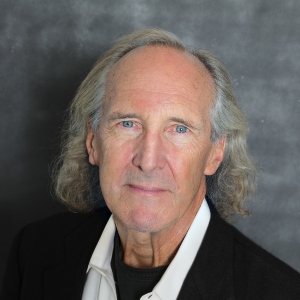
Frank Rogers Jr., PhD, is the Muriel Bernice Roberts Professor of Spiritual Formation and Narrative Pedagogy at Claremont School of Theology. He’s a spiritual director, speaker, retreat leader, and the author of Practicing Compassion, Compassion in Practice: The Way of Jesus, and The God of Shattered Glass: A Novel. He focuses on spirituality that is contemplative, creative, and socially liberative. He is the cofounder of the Center for Engaged Compassion (centerforengagedcompassion.com) and lives in Southern California with his wife, Dr. Alane Daugherty, with whom he shares three sons.

Contact
[email protected]
6757 Cascade Road SE, #162
Grand Rapids, MI 49546

As an Amazon Associate and Bookshop.org Affiliate, Lake Drive Books earns from qualifying purchases.