
Buy Here: Bookshop | Amazon | Lake Drive | Barnes & Noble | Books-A-Million | Audible | Apple | Google Play
Subscribe to our email newsletter and receive a link to buy Baptistland at 50% off, plus shipping.
Baptistland (Excerpt)
A Memoir of Abuse, Betrayal, and Transformation
Christa Brown, Foreword by Boz Tchividjian
Table of Contents
Foreword
Author’s Note
Prologue
The First Death
1. The Good Days
2. God Loves You, Christa
3. Aftermath
4. German Fairy Tale
5. Vomit-Cleaner
6. Conditioner!
7. Libération
8. Return
9. My Face
The Second Death
10. Married the Wrong Sister
11. Mad Dog & Beans
12. Becoming a Lawyer
13. Motherhood
14. My Law Practice
15. Rita Won’t Like It
16. And Charlie Was a Happy Man
17. Caulbearer
The Third Death
18. The Do-Nothing Denomination
19. Hateful Faith
20. You Did Not Choose to Seek Help
21. Cancer
The Fourth Death
22. Mom’s Hospital Room
23. Erased
24. The Do-the-Bare-Minimum Denomination
25. Into the Beyond
Afterword: Letter to Clergy Sex Abuse Survivors
Acknowledgments
Notes
Prologue
When despair for the world grows in me . . .
I feel above me the day-blind stars
waiting with their light . . .
—Wendell Berry
dad taught me to see patterns in the dark. On the rare nights when he wasn’t working, he’d hold my hand and take me out into the yard where I would watch in wonder as he looked up into the darkness, extracted a pattern from the points of light, and then shaped that pattern into a picture. At first, feeling swallowed by the inky enormity overhead, I struggled to see what Dad saw. But over and over, he would drop to one knee, wrap an arm around my shoulder, and with his other arm outstretched, he’d point to each of the seven stars of the Big Dipper, and one by one, I would follow his line of sight out beyond his index finger to mentally connect the sparkling dots. Eventually, I managed to see it, and over time, I learned to spot the pattern all on my own. After that, I never lost it. The Big Dipper was always there waiting for me.
As Dad moved on to the Little Dipper, Orion, and the Milky Way, the patterns of the dark grew familiar, and together, we made wishes on shooting stars. Usually, it was just the two of us. I guess my sisters weren’t interested. Or maybe they were afraid of the dark. So was I—and still am—but leaning up against Dad and wafting in the smell of his Old Spice, I felt safe.
After we moved to Farmers Branch, those magical nights ended. Maybe the big-city lights of neighboring Dallas made the sky too bright, or maybe Dad was just working too much overtime. But many years later, when I was out in Marfa, I looked up and saw the Milky Way stretched like a wide white ribbon across the sky, and I swear I suddenly caught a whiff of Old Spice. I felt the warmth of Dad’s arm, and the stars seemed like old friends.
Whenever I think of Farmers Branch, a host of memories fills the air around me. Like stars on a West Texas night, they shine so bright that, eventually, I can hear the voices in the memories and see the patterns in the points of light.
It’s not always easy. There is little that is linear in my memories. Time to me seems more circular and associative. Many of my memory fragments are a chaotic mess, but I try to impose order on them anyway because how else could I talk about them? I navigate into narration, but really, the memories are more like stars in an endless night sky.
When you’re raised in a “what happened didn’t happen” sort of family, things aren’t necessarily what they seem and the patterns aren’t always apparent. Even the bare bones of figuring out what’s true and what’s not is fraught. So let me just tell you up front that at least two of my sisters, and maybe all three, would see family patterns differently from me. Their views would tell different stories, as though they were seeing the sky in some alternate universe. All I can do is tell you my own story and tell it from the vantage point I hold at this moment.
I died four times. Four times when the elemental structure of my being was flung into the dark void. This book is my attempt to make sense of those deaths. Rather than fleeing from that darkness, I have chosen to walk into it, following the threads of my memory through the labyrinth of my life—and my deaths—connecting the points of light as best I can. The labyrinth was long and arduous, but as each death rebirthed me into a new self, it ultimately led to a center of peace.
My first life ended when a Southern Baptist pastor took an unholy hankering to my young Lionette legs. Of course, I didn’t know my life had ended. I was just a naive, far-too-trusting church girl. But everything my life had been before his hankering came screeching to a halt, and I was never a kid again. My second life ended when my lousy brother-in-law decided he had “married the wrong sister” and made a move on me. In some ways, that second death was sort of like the first, but maybe that’s just the nature of death. There’s a before and there’s an after, but even though there’s no blending of the two domains, it’s only much later when you realize you’re in a different place. My third life ended when I started talking about what that predatory preacher-man had done to me, and I was confronted with the truth that no one gave a flip, except for trying to shut me up. Stepping into that reality was like stepping into an alternate no-exit universe in which the Dantean layers just kept going deeper. It was a death so hellish that my very cells mutated in rebellion. Then, just a few days after Mom died, my fourth life ended when all three of my sisters stood in front of the credit union and decided to split the money without me—as though I never existed. They swore each other to secrecy, but since I refused to die quietly, their secrecy didn’t succeed.
Of course, the devil is in the details. This is the story.
1: The Good Days
What we remember from childhood we remember forever—permanent
ghosts, stamped, inked, imprinted, eternally seen.
that first summer in Farmers Branch, tar bubbled up in the street like some sticky, stinky ooze from the underworld. Judy and I took turns riding our shared hand-me-down bike up and down the block, popping tar bubbles with the tires. Our rules were that we had to keep pedaling forward and we couldn’t put a foot down. So we would twist and turn the handlebars, trying to stay upright while we followed the black lines that filled the asphalt’s cracks in chaotic patterns. At the end of each turn, we would report back on how many tar bubbles we had popped. Judy always won.
Of course, it was really the Texas heat that always won. No matter how many tar bubbles we popped, more kept boiling up. Dad hadn’t yet put the window units in, and Mom could hardly bear the heat. She had shut all the blinds to block the sun and was trying to get some unpacking done, but every time we stepped in the kitchen for Kool-Aid, she’d be sitting with some iced tea and a folded paper fan. The air inside our west-facing house was flat-out stupefying. So we’d hustle back outside just as fast as we could. Besides, we knew it was better to stay out of Mom’s way.
I wasn’t happy about the move, but still, I’d seen one good thing right away. Dad had found us a house right across the street from a school, and as soon as we pulled into town and turned a corner around the school’s back side, Mom pointed out that it was where I would go for fifth grade in the fall: Valwood Elementary. It was a long, low, flat building.
No stairs. That was the first thought I remember having in Farmers Branch as we drove past the back side of the school on the last couple blocks of our road trip from Wichita. I stared at the building even as Mom claimed victory on the game we’d been playing. Ever since we’d crossed the Texas border, she’d been egging me on to guess the name of our new street. “Think about faraway places,” she’d said, her arm thrown over the back of the front seat. So, while staring at her hand as she picked at the skin around her thumbnail, I’d guessed names like “Paris Lane” and “Taj Mahal Boulevard.”
“Think about the last report you did,” she’d hinted. It was a school project Mom had helped me with, clipping pictures of Egypt from old copies of National Geographic that we got at the thrift store. “Camel Street? Nile Way? Red Sea Road?” With every guess I tossed, Mom just smiled like the Sphinx. Somehow, I never guessed Pyramid Drive.
“You see, I told you you’d like it,” she exclaimed, pointing to the street sign. But I was still fixated on the school. No stairs.
To this day, I can hear the cackle that Judy would let loose whenever she managed to shove me on the stairs in that two-story schoolhouse in Wichita. I was always so afraid I might tumble all the way down, yet I could never manage to keep an eye out for Judy and look where I was going at the same time. So I just held my breath and held the rail. Not that it ever made any difference. If Judy was in the mood for a laugh, she would find me. That was pretty much the core of our relationship.
In Wichita, we had always been in the same school, and even the same classroom for a couple years. That was because I’d been placed in an experimental program which kept me at the same grade level but put me, and a half-dozen other kids, in a classroom with kids a year older. It meant I wound up in the same classroom with Judy.
That was the downside of being in the “gifted” program—no escape from Judy. The upside was that, for those early years in Wichita, the program kept me with the same small group of friends, and they got used to me. For a kid with a facial scar and a speech impediment, that continuity of friendships was invaluable.
Things changed in Farmers Branch. Not only would I never again be in the same classroom with Judy, but for a while, I wouldn’t even be in the same building with her. Sixth graders went to junior high in Texas, which meant Judy would be at a different school. So she wouldn’t be lurking around corners or shoving me against walls at my school. She simply wouldn’t be there.
Another good thing about the move was that Mom decided to stop dressing Judy and me in look-alike clothes. I figure I’d better tell you the good things like this right away, because things went downhill fast in Farmers Branch, and once I start telling the bad things, I might forget the rest. I don’t want to do that.
It was one of the few ways that Judy and I were alike. We both hated those matchy-matchy outfits Mom made us wear. She sewed them herself, and she always beamed with pride when people told her how cute we looked. But whenever I see old photos of Judy and me in our look-alike short sets with the rickracked crop tops, what I see is how Judy is glowering at the camera, looking like she’s ready to punch someone. She probably did just as soon as the picture was taken. That someone was probably me.
Occasionally, Judy would punch my younger sister, Nancy, but it was rare. Mom tended to protect Nancy, and Judy was simply more habituated to tormenting me. My oldest sister, Rita, was above the fray and untouchable. So I was the one on whom Judy dissipated her rage.
Sometimes I wonder if Judy was just born mad. Mom occasionally talked about what a difficult baby she’d been. When she got old enough to pull herself up, she would stand in her crib screaming while she held the rail and yanked herself back and forth, banging her head over and over until she exhausted herself.
“I wasn’t going to give in to that,” said Mom. “She just had to learn.”
Whenever Mom recounted this, she seemed to have a measure of pride in her voice, as though she had won some battle by not letting Judy get the best of her. She would laugh at how hardheaded Judy was, extending her arms and bending her elbows back and forth to mimic how Judy would bang her head in her crib. I always laughed along and wished that I myself could win some battles with Judy. But for me, there was never anything to do but curl up in a ball and wait for my sister’s rage to pass.
Nowadays, I try to keep that image of Judy in my mind—a child so desperate for attention that, incessantly and futilely, she kept banging her head against her crib. It’s an image that helps to soften all the ugliness that came later. Besides, I figure I probably had something to do with Judy’s deprivation. My birth came just one year after hers, and with my medical issues, I imagine I kept Mom busy.
My sisters and I were all born in Texas—I doubt that Dad would have had it any other way—but we moved to Kansas when I was barely three. Our house in Wichita had five huge cottonwood trees at the back of the lot where Judy and I caught lightning bugs on summer nights, and during the days, we’d sit there in the sandpile, conjuring schemes for getting rich off the tiny fluffs of “cotton” shed from the trees. We planned everything we’d do with the money we’d make from bunching all the little fluff bits together and selling them. After we’d exhausted our dreams for an extravagant future, Judy would get up and start singing “Waltzing Matilda.” She’d throw her head back, thrust her chest to the sky, and weave circles in the grass, singing at the top of her lungs. I’d get up and join her, and we’d hold hands and twirl round and round, faster and faster, until finally we dropped, dizzy and exhausted. To this day, whenever I see cottonwood fluffs in the air, I hear “Waltzing Matilda” in my mind.
As far back as my memories go, there was always at least Judy to contend with—her pinching, punching, shoving, pushing, arm-twisting, hair-pulling, clawing, kicking, hitting, and terrifying tickling. She couldn’t tolerate frustration. If she didn’t get what she wanted, which was often, she threw a fit, and frequently her fits centered on lashing out at me. Heck, even my Woody Woodpecker coloring book wasn’t safe from Judy. Just two days after Santa brought it to me, she tore it apart. No reason at all. That’s just how she was.
I cried about that coloring book. I suppose that’s why Judy destroyed it—because she could see how much I loved it. But with a raised palm, Mom just said, “If you keep on crying, I’ll give you something to really cry about.”
So, I learned there was never any point in complaining to Mom about Judy’s torments. “Just don’t rile her up,” she’d say. Or worse, she’d make us both apologize. “Tell your sister you’re sorry,” she’d demand, and even though I never could figure out what I was supposed to be sorry for, I knew I had to do it. Then, after Judy and I had each taken our turn at phony contrition, Mom would insist we hug one another, and almost always, Judy would be giving me a good hard pinch where Mom couldn’t see.
Up until I was about six, I shared a trundle bed with Judy in a room with animal print wallpaper. Every night, after Mom was through reading to us—Five Little Peppers was my favorite—we said our prayers:
Now I lay me down to sleep,
I pray the Lord my soul to keep.
If I should die before I wake,
I pray the Lord my soul to take.
Judy recited it as fast as she could, but I prayed it earnestly, terrified of the possible truth of it and always knowing that if I didn’t wake, it would be because Judy had finally held the pillow over my face for too long. After my prayers, I would turn to whisper a second plea to the animals on the wall. They were the ones I counted on to protect me in my sleep.
Every day, from the moment I awakened, I was always scanning the air for danger. Whenever one of Judy’s rampages started brewing, if I could spot it soon enough, I would crawl into the bottom of the pantry and tuck myself behind the bags of beans and rice. There, I would slow my breath and imagine myself invisible, suppressing my own life force so Judy wouldn’t find me.
Eventually, when I got too big and couldn’t cram myself into the pantry, I had to find other places and use other tactics. It was high-stakes hide-and-seek, and whenever I failed, the cost was painful. Hiding under the bed was fast but seldom worked; Judy would just drag me out. Inside the laundry hamper was better, but I needed a head start because it took a while to get into it. Once, I just flat-out locked her out of the house.
We were playing kickball in the backyard, and I’d sent the ball straight into a rose bush. Judy ran to retrieve it, and while she stood trying to hold her finger over the hole left by a thorn, I heard her low growl: “I’m gonna kill you.” I turned and ran for the house. Judy was always way faster than me, but that was one time when I got enough of a head start. I locked the door behind me just as Judy flung her fists against the wood. She pounded and kicked at the door, and screamed at me to open it, but I didn’t.
I inched back the curtain on the utility room’s window and peeked at her face. She was transformed. A monster.
“I’m gonna kill you,” she shouted, spewing spit on the window.
I hovered there behind the door, trying to decide what to do. Judy’s murderous rage showed no sign of abating, so I went to my room and took out my New Testament—the little white one that Brother Morgan had given me when I got baptized—got on my knees, and began to pray. Since I was “saved” by then, I must have been at least seven, maybe a little older. “The Lord is my shepherd, I shall not want.” While I held the holy book in my hands and pleaded with God to protect me, I recited the prayer I’d learned in Sunday school.
After a small eternity of recitation and prayer, I heard Mom’s car in the driveway. Knowing she’d be mad if she saw that I’d locked Judy out, I ran to the back door, quietly turned open the lock, and scurried back to the bedroom. Clutching the New Testament to my chest like some magic amulet, I heard Judy open the back door just as Mom came in the front door. “Thank you,” I whispered.
So, it’s not as if my life in Wichita was ever safe. But it was normal and predictable. Even the “duck and cover” drills at school seemed normal, although those images of nuclear bombs always terrified me, and even as a kid, I never could understand how my school desk would protect me against that. But “duck and cover” was what our teacher said we should do, so I did.
Our kickball games caused trouble more than once. When one of us accidentally kicked the ball into the backyard of our fearsome neighbor, Mrs. Smith, we couldn’t figure out what to do. Whenever we walked to our friends’ house, two doors down, we’d balance on the curb to avoid touching Mrs. Smith’s grass and incurring her wrath. But Judy mustered up the courage to knock on her door, and when no one answered, we went around to the gate. It was locked, but Judy climbed over, found the ball, tossed it to me, and then started climbing back over the gate. Just when she was at the top, Mrs. Smith’s face suddenly appeared in the garage window right next to the gate, and she was screaming bloody murder. Startled, Judy fell from the gate. She hit the pavement hard but scrambled right up, and we both hightailed it home.
By then, Mom was back, so we figured we were in trouble. But instead of yelling at us, when Mom saw how scraped up Judy was, she marched right over to Mrs. Smith’s house, knocked on her door, and let loose a piece of her mind. We could hear Mom all the way from our own porch. “They’re just kids! How dare you terrify them that way? She could’ve broken her skull!” It felt good to hear Mom sticking up for us.
On weekends, Mom would sometimes whip us up piles of pancakes, as many as we wanted, shaping them into elephants, camels, and giraffes. It was magical. My heart would skip a beat as soon as I saw her take the Aunt Jemima syrup from the pantry. Sometimes, while we ate our zoo-animal pancakes, Dad would take the newspaper and fold a pressman’s hat for each of us. He’d work the toothpick in his mouth back and forth as he turned and folded the paper just so, until he plopped a hat onto each of our heads. If it was a Sunday, one of us would get a colored hat folded from the funnies.
Years later, when my own daughter was small, I tried like heck to pour pancakes into identifiable shapes and never could. But Mom had the knack for it. Whether with her batter-pouring artistry or her way with words, she made pancake shapes that came to life in my mind, just like the rabbits and fish that she sometimes pointed out in the clouds when we hung clothes on the line.
There was nothing I loved more than those rare times alone with Mom, handing her the clothespins and wafting in her scent of Aqua Net, talc, and Tabu. Sometimes she would recite Longfellow’s poem “Hiawatha’s Childhood” while she worked:
By the shores of Gitche Gumee,
by the shining Big-Sea-Water,
stood the wigwam of Nokomis,
Daughter of the Moon, Nokomis.
I had no idea where Gitche Gumee was, but I loved the sound of it in Mom’s voice. In those moments I was in heaven.
I search my mind for memories of Mom holding me, and I comb old photos looking for myself in Mom’s lap. I can’t find any. Instead, I find an old image of my oldest sister, Rita, holding me when I was a baby, and I wonder whether she wound up taking the role of a surrogate mom for me. Or was it just a single snapshot? You might think I would at least hold some vague body-memory of feeling safe and loved in Mom’s arms. Yet, that scarcely exists either. What I can summon—and what I cling to—is the memory of standing next to her while she hung laundry on the line. Sometimes I’d slide up against her leg and she wouldn’t step away.
Mom had honeysuckle, morning glories, roses, gladiolus, and bells of Ireland growing along the fence in Wichita. “Can you hear the tiny bells?” she’d ask me. Then she’d conjure a whole magical world of fairies who lived among the bells of Ireland, eating the honeysuckle nectar and using the lightning bugs to illumine the night. Before we finished up and carried the clothes inside, we’d always stop to pull out the stamens of a few honeysuckle flowers and lick some of the fairyland nectar for ourselves. Sometimes we’d stop to watch a roly-poly, or she’d gently lift a ladybug from a leaf and tell me they brought good luck.
With her words, Mom could also conjure faraway places. Every so often, we’d all pile in the car and go park near the airport to watch planes take off. That was Mom’s favorite thing. She would imagine where the planes were going and then bring other lands to life with her stories. I’ve often wondered if my wanderlust got its start on those nights with all of us together watching the planes.
Other magical moments materialized on days when the bookmobile came. Mom would walk us to the end of the block where the wheeled cave of wonder was parked. The anticipation of what I might find always had me skipping. When we got there, we’d wait our turn and then enter the cave where Mom would help us explore. She’d let us take our time, and each of us got to pick two books. We’d print our names on lined cards and then carry home our precious cargo, which we got to keep as though our own, until the bookmobile came around again.
Books: They were what allowed me to glimpse a world beyond the constrained boundaries of family, school, and church. They were also the only safe thing to care about. Judy couldn’t destroy them because they belonged to the library, and in our family, library books were practically sacred.
Though a measure of fear was always part of the normalcy in my family, it wasn’t until Farmers Branch that everything got really catawampus. Ironically, I often wondered whether Dad moved us there because the bucolic-sounding name of “Farmers Branch” gave him some vague feeling of familiarity and safety. Raised by a ferociously violent father and left for dead on a World War II battlefield, he had little trust in anything or anyone. But the land and all it brought forth was true for him. He remained a farmer at heart—a man who could take one look at the clouds and know what kind of weather was on the way.
It was 1962, and with the country having moved on from the McCarthy era, the Dallas Morning News finally had a union shop. So Dad wanted to return to Texas. He started a pressman’s job at the News, while we all stayed in Wichita to finish up the school year.
After a few weeks, he put up a down payment on a 1,300-square-foot house in Farmers Branch without Mom having ever seen it—a fact that makes me catch my breath. Mom wound up living fifty years in a house she’d had no say in selecting. But it had two bathrooms, and when we first got there, Mom oohed and aahed over that like she’d died and gone to heaven. The house was across from a school, and just a block away from a library, a rec center, a pool, and a park. That was so like Dad—always wanting to make sure his kids would have more opportunity than he had.
When we first moved in, the yard was flat and bare, without a single tree. So, at Mom’s urging, my three sisters and I drew diagrams of how we’d like the yard to look and what we’d like to plant. I drew the yard with lots of fruit trees, a vegetable garden at the back, and flower beds on the sides, with gladiolus, hollyhocks, morning glories, and bells of Ireland—just like Mom’s flower beds in Wichita.
Dad went right to work on it, and for the next forty years, he spent every minute he could working in that yard, transforming it into an urban oasis. Right away, he planted a couple pecan tree sprouts at the back, even knowing it would probably be ten years before they produced. Then he planted pear, apple, and fig trees, and put in a mounded berm for spring-blooming bulbs. He never had any kind of irrigation system; he’d just stand out there holding the hose, watering things by hand. That yard may have been the only place where Dad was truly happy.
When he got a load of sand to loosen up the garden patch, Judy, Nancy, and I used it to build a giant fort. We spent a couple of days working on it, and it was as fine a fort as any you would ever see. But just about the time we finished it, the Harrison twins leaped over the fence and body-bombed it, flinging themselves into our fort every which way. We yelled at them, but they thought it was great fun, and in any event, the fort was destroyed. It didn’t seem like there was much we could do about it.
Mom thought otherwise. “Why didn’t you stop them?” she demanded. She had wanted to take a photo and we had spoiled things by letting the boys demolish the fort. We tried to explain, but she wouldn’t hear it. “You could’ve stopped them if you’d wanted to,” she insisted.
Seeing how angry Mom was, I prayed fervently before going to sleep that night, imploring God to please restore our fort so that Mom wouldn’t be so upset. I knew God was busy, of course, but I figured if he could part the Red Sea, he could surely rebuild a sand fort so that my mom might feel better. But of course, the next morning, when I hopped out of bed to run and look out the back window, I could tell that God hadn’t come through.
That first summer, Judy and I would often play in an empty lot by the rec center. They were doing construction work and had blocked off the whole corner with rows of thick wooden posts whose tops were cut on the diagonal. One day, Judy decided to jump from post to post, and she taunted me to do the same: “Scaredy cat, scaredy cat!”
Finally, I climbed on top of one of the angled posts, sized it up, and jumped. I made it, but it was tricky. You had to land your foot at an angle, heel down.
Then Judy challenged me to see who could keep hopping post to post the longest. For Judy, who had more agility, it was no problem. But I overshot a jump and my leg came down on the far side of a post with the pointy part sticking into the back of my thigh. It tore a long gash behind my knee and left wood bits and splinters up and down the back of my thigh. I hobbled home, afraid of how mad Mom would be, and sure enough, she was.
I spent the next couple hours on my belly with Mom berating me while she dug all the bits of wood out of the gash and all the splinters out of my thigh. There was no such thing as going to the doctor for something like that; Mom just took care of it. Once, in Wichita, when a spider popped out of my toy sewing machine—Mom said it was a brown recluse—the bite swelled into a large boil and Mom just lanced it herself.
The gash behind my knee left me with a long, wide scar. A few years later, when I became a high-kicking Lionette on the football field, I sometimes felt a slight catch there. But though the catch would conjure the memory of how much it hurt when Mom was digging around in the gash, mostly what I remembered was how much Mom yelled at me while she did it.
The Harrison twins—Phil and Bill—were part of the neighborhood gang that we hung out with for a couple of years. We all played kickball together and always in the yard of the kids next door since Dad had made it clear he didn’t want the neighborhood kids in our yard. Once, when I missed a ball and failed to get a player out on first, Judy marched over from her spot as catcher and kicked me in the shins so hard I fell to the ground. Then, with me on the ground, she kicked me a couple more times for good measure while screaming that if I missed any more balls, she’d teach me a real lesson. The neighborhood kids watched in stunned silence.
By then, I was already taller than Judy, so you might think I would have fought back. But I didn’t. She had always been scrappier and stronger, and I was habituated to simply enduring.
As I struggled to my feet, I half-glimpsed the other kids’ wide eyes, but I kept my head down, clenched my teeth, and resolved not to cry. Judy shoved me and told me to get back on my base. “You better not miss again,” she growled, stomping her way back to home plate. It was then, with Judy’s back turned, that I made the mistake of raising my chin and looking full-on at the faces of the other kids. Even Phil and Bill, rough as they were, had mouths agape.
I started to cry, and as I turned to run toward home, Judy yelled after me, “Crybaby!”
I always hated myself for crying and wished I could be more like Judy. Mom could spank Judy until her wrist hurt, but Judy would never give Mom the satisfaction of seeing her cry. She’d just grit her teeth all the harder. But I couldn’t stop the tears. So I waited in the garage for a few minutes before going into the house.
When Mom saw me, she asked why I wasn’t out playing, and I tried to tell her about Judy kicking me. But Mom just said, “If you want to play kickball, then sometimes you’re gonna get kicked.”
“But, Momma, it wasn’t like that.”
She cut me off. “Stop being a tattletale and learn to get along.”
What I learned was that there was never much point in trying to get help from Mom. There was no such thing as “getting along” with Judy; there was only getting out of her way. So I learned not to play kickball anymore. Instead, I stayed inside and devoured Nancy Drew books. With the library just a block away, I had an unlimited supply.
It wasn’t as if Mom was any easier on Judy. The next summer, Judy went tearing around the bases and flung her arm against a metal play-set as she ran past. In pain, she left the game, walked home, and lay down on the couch, where she stayed for the rest of the evening. Occasionally, I’d hear her whimper.
Never before had I ever heard Judy whimper, but Mom didn’t even seem to notice. She was bustling around as though Judy were invisible, and I could tell she was set on ignoring Judy.
I thought back to when Judy had broken her nose and split her face open on the school playground in Wichita. She’d gone tearing out for recess and had run full-on into the lowest of the metal pull-up bars. She fell unconscious and bled so much that kids came running in from the playground yelling, “Judy’s dead!” For just a bit, I was distraught. But then a teacher thought to find me, and she said they had called my dad who was going to take Judy to the doctor. She wasn’t dead, the teacher assured me.
That was so like Judy—hardheaded to the nth degree. She ran so headlong into that metal bar that she broke her face wide open, yet even when kids said she was dead, she didn’t die. For a long time after that, I regularly asked God to forgive me for all the times I’d wished for a life without Judy.
“Momma, I think maybe Judy might need a doctor?” I finally ventured ever so tentatively, hoping not to make Mom mad. “It seems like she’s really hurt.”
“Well, if it hurts, then maybe that’ll teach her not to go flinging her arm around.” Mom turned back to her broom, and I knew not to say more.
Judy continued to whimper. She didn’t get up to go to bed but just stayed there on the couch in her clothes. I brought her some water, but she refused it. And Mom just acted like Judy didn’t exist and then went to bed herself.
I was so worried about Judy that I was lying awake when Dad got home from his night shift. As Mom and Dad talked, I listened as best I could. Dad wanted to know why Judy was on the couch, and Mom kept saying that Judy just needed to learn to watch where she was going. “She doesn’t need a doctor,” Mom insisted. But after a little while, Dad changed out of his inky work clothes, gathered up Judy, and drove off. When they came back, Judy had a cast. “It was broke,” he said.
Of course, doctors were expensive, and money was always tight. Those realities had no doubt factored into Mom’s reluctance to take Judy to a doctor. Mom herself went several years with a gap-toothed smile because when she had a couple teeth go bad, rather than spending the money to get crowns, she had the teeth pulled. Eventually, she got a partial plate, but those gaps were part of her smile for quite a while. There was always something else the money was needed for, and Mom put herself last. That’s just how it was; doctor visits were a rarity.
Mom and Dad were both children of the Depression. Dad grew up on a cotton farm in North Texas, a few miles west from the then-tiny town of Sanger. He was the seventh of nine siblings, one of whom died in infancy, and all of them born in a house without electricity, running water, or indoor plumbing. Dad walked into town to go to school, cutting through the fields when he could, and was always careful to skirt wide around some mean dogs on a neighbor’s property. Even decades later, when we’d occasionally drive out on those country roads, just to reminisce or visit the old cemetery, Dad never failed to mention those dogs, their fearsomeness having cut a deep rut in his memory.
Except for the squirrels and rabbits they shot in the fields, the family of ten grew or raised almost all their own food. They grew their own vegetables, butchered their own hogs, milked their own cows, churned their own butter, and gathered their own eggs from their own chickens. Nobody else did much of anything for them. Dad’s mom and four sisters sewed the family’s clothes along with the quilts on the beds, and they still picked cotton in the fields too. By the time Dad was eight, his three older brothers had left home, so most of his memories were of picking cotton in rows alongside his sisters. He talked of picking as much as three hundred pounds a day, and for his whole life, it seemed he never forgot the stooping weight of that cotton sack on his back.
Schooling took second place to working on the farm. September after September, Dad would start the school year late so he could work the harvest, and then on his own, he’d have to catch up on all the schoolwork he’d missed. In the spring, he’d miss school again for the planting season. Dad often reminisced on how much he had envied the “city kids”—the kids of small-town Sanger—because they didn’t always have to start out behind.
The family’s farmhouse burned to the ground when Dad was eight, an event that, for his entire life, remained vividly present in his psyche. As he always recounted it, the family lost everything except “one old rickety rocking chair” that a neighbor managed to pull out from the fire. The family had gone into town for provisions, and just as they were returning, they saw the flames and smoke in the distance, knowing it was the direction of their house. “By the time we got there, it was all gone,” said Dad.
The fire was determined to be arson, with speculation that it was done by someone whom Dad’s hot-tempered father had offended. But no one was ever charged with the crime. Dad went to live for a while on an older brother’s nearby farm, and the whole family set to work building a new house. When they had a roof and walls, they set to work building some beds, a table, and chairs. The family did it all themselves, and still tended the farm at the same time.
By contrast, Mom grew up as a city girl. During the Depression, her family raised rabbits for food and recycled every scrap of everything. Her family had left Illinois with nothing more than what they could pile in their car and had driven west with the desperate hope of starting a new life in California. Her older brother, Jack, had dropped out of high school to work with his dad in building houses.
Mom and Dad’s Depression-era habits carried forward into our own household. We darned socks, patched shirts, and mended moth holes in our sweaters. Mom kept used pieces of aluminum foil on a shelf, and none of us ever dared use a piece just once. We shopped day-old bread and drank homemade iced tea—never sodas. Potato chips were unthinkable, something rich people ate. Once a month, when Mom would roast a chicken, she’d carefully pick all the tiny pieces off the carcass to make a casserole with the leftovers, and then she’d boil the neck and back to make a soup. Three meals for a family of six from a single chicken.
Judy was a picky eater, and often Mom would decide to teach her a lesson. “You’ll sit at the table ’til you eat what’s on your plate,” she’d command. So Judy would sit there. Mom would launch into one of her lectures about the starving children in China, admonishing us to “be grateful for how good you’ve got it.” I’d listen quietly and clean my plate, mentally vowing to take food to China someday, but Judy would sit with her jaw set in stone. Mom never won those battles.
The only time I joined Judy in her refusal to eat was when Mom served spinach. It was always the canned stuff—slimy, salty, and stringy. Judy and I would sit for what seemed like forever until, finally, when Mom had gone back in the kitchen, Judy would slop her spinach onto my plate, and with a grin, reach over and pinch me—hard. It was her way of saying “you better not tell or else.” By then, the spinach was cold and even more awful than it had been at the start, but eventually, I would eat it.
Dinner time was often difficult for other reasons. Dad sat at the head of the table and everything turned on his moods. If he was in a good mood, things went smoothly. If he was in a bad mood, then we all lived and breathed with only one purpose—to avoid anything that might escalate his anger into rage. In truth, Dad’s seething anger was almost worse than his rage, because it carried the anticipation of what would follow. But no matter how much the tension grew, we would all sit, heads down, and continue eating as though everything were perfectly normal, all the while waiting with dread for the full-on explosion that we sought to avoid but knew for sure was coming.
Year after year, Mom lined the four of us up for stair-step style photos, always in the same order based on our ages—Rita, Judy, Christa, and Nancy. She often talked about how the four of us could be like the singing Lennon Sisters on The Lawrence Welk Show. But of course, that was Mom’s little fantasy, not ours. I was more enraptured with the magic sound of Myron Floren, Welk’s longtime accordionist. Sometimes, Dad would even get up out of his chair and dance a little jig with me.
As our bodies began to change with adolescence, so too Judy’s torments changed as she found new ways to humiliate me. She would often kick me in the crotch, pinch my nipples, and punch at my budding breasts. Since she was a leftie, it was the outer side of my right breast that often bore the bruises.
When I started wearing a bra, Judy would pop the back of it endlessly, and if I got annoyed, she’d reach around front and shove her hand under it for a painful squeeze. I learned that it was better to just let her pop the back.
Judy loved to follow up her torments by telling me that I didn’t have any sense of humor, that I couldn’t take a joke, that I was too sensitive. No matter how much she pinched, hit, jabbed, and taunted me, the problem was mine because, after all, she was just playing. If I cried, it only fueled her to hit me harder and then to follow up by calling me a crybaby.
To escape the worst of her, I learned avoidance tactics. For example, I gave up playing the card game Battle with her, because if I won, she’d punch me, and if she won, she’d punch me. Either way, I’d be bruised, so it was better not to play. Even years later, as adults, whenever Judy would want to play a card game at Thanksgiving, I would always bow out. I carried in my body and mind the near-constant threat of harm from her in childhood and adolescence, and the certainty that no one was ever going to protect me.
Birthdays were particularly bad. Judy twisted the notion of birthday spankings into a full-on license for unrestrained birthday beatings. Invariably, I’d wake up on my birthday with a clenched stomach, knowing what awaited. One birthday “spanking” was never enough. She felt fully entitled all day long.
So, I tried to be like the roly-poly bugs that I sometimes gathered into jars. I’d curl into a ball to protect myself, but of course, I didn’t have an armored shell. And at nighttime, in our shared bedroom, there was nothing I could do. Sometimes, in the dark, I’d awaken in a panic, unable to breathe, with Judy holding the pillow over my face, growling in my ear that no one would ever know how I died. Then, she’d suddenly lift it, tell me to stop snoring, and slip back into her bed as though nothing had happened. One time, when she lifted the pillow, she explained how she had read that, without oxygen, a person would turn blue. While I lay gasping, she said she had wanted to see whether it was true—whether I would really turn blue.
There were other times when I’d wake up on the floor, flailing and crying because Judy had shoved me out of the bed. Smirking, she would pinch the skin over my ribs, twisting till she saw the pain in my face, and then she’d whisper, “You better not tell.” So I didn’t.
Judy had a knack for zeroing in on the most sensitive spots. For example, she knew how to target the most painful place on my knee where she would squeeze to the point of agony. Of course, she was also trying not to leave any visible marks. Not that anyone was looking. Once, she gouged out three deep bloody grooves on my shoulder with her fingernails. Usually, she just left small thin crescent moon bloodlines on my arms, but that time, she left long furrows and knew she’d made a mistake. I could see it in her face. But all it took was her threatening to kill me and I wore sleeves in the heat all summer long so that Mom wouldn’t notice.
Even the dog was on Judy’s side. If she took a notion, she’d provoke him to attack me. She’d yell, “Sic her, Frisky, sic her,” and Frisky would immediately obey, while I would scurry on top of the dining table in terror. I’d stay there, thinking of all the homework I needed to be doing and hoping Mom would get home soon, while Judy would laugh in glee at my fear of the small pug, growling and leaping as if he would eat me alive.
I always wondered if Judy had gotten the idea to sic Frisky on me from listening to Uncle Jack and Mom talk about Oakie, the Doberman pinscher they’d grown up with. Jack loved to regale us with the story about how he’d trained Oakie to charge people. “He’d go running toward someone, his teeth bared and barking like he was gonna tear them apart,” he’d chuckle. “Their eyes would get as big as saucers! They’d be terrified of this big lunging Doberman, and then Oakie would just skid to a stop right in front of them.”
Jack invariably laughed himself to tears whenever he told this story, and Mom would join in. I always thought it sounded awful and imagined how I would feel if a big Doberman came charging toward me. But whenever I said anything, they would just dismiss me: “Oh, but he never actually hurt anyone.”
Even when Judy wasn’t inflicting pain, she was always messing with me. The notion of bodily boundaries simply didn’t exist. For bath time, we weren’t allowed to lock the bathroom door because, with five females sharing one bathroom, Mom said we needed to leave the door unlocked so that if someone had to pee, they could. As a practical matter, this meant Judy could come in any time she wanted and shove my head underwater. And if I locked the bathroom door, contrary to Mom’s rule, Judy would just pick the lock with a paper clip.
Basically, Judy just did whatever she wanted to me. She would reach out to pop one of my pimples as though it were one of her own, and Mom practically encouraged her. “Let her help you,” she’d say. “You don’t want to walk around looking like that.” Of course, more often than not, Judy’s pimple-popping efforts just made things worse. She seldom washed her hands, and so, what started as an ordinary pimple would often become an angry infected blob.
We didn’t know why at the time, but Dad’s rages grew more frequent in Farmers Branch, and Mom, not yet forty, began breathing into paper sacks to try to deal with her panic attacks. As kids, we often ended our days in fitful attempts at sleep, wondering whether the terror of the evening would wear off while Dad worked his night shift, or whether he’d arrive home in the early morning stomping his feet and slamming doors. Sometimes his rages would dissipate quickly, as though his demons just got tuckered out, but usually they lasted for days at a stretch. We were always holding our breath, waiting for the next volcano. Even Frisky, the dog, learned to stay under the table, out of reach from Dad’s kicks.
I dealt with it all by playing the piano. But strangely, when I started getting serious about it, Mom became discouraging. “It’s not practical,” she’d say. “You’re living in a fantasy.”
I couldn’t understand. Whenever some relative would visit, Mom would brag on me and insist I play for them. Though I played well, I never imagined the relatives really liked it much—they just sat politely with stiff smiles. Then afterwards, Mom would berate me. “What are you thinking, Christa? That you’re going to be a concert pianist?” She said it was time for me to “grow up” and live in the “real world,” and eventually, she insisted that if I wanted to take more lessons, I’d have to pay for them myself. That was hard to do with babysitting money and some cash-off-the-books work at the local five-and-dime. But I managed. And while Mom still demanded that I perform whenever anyone came by the house, behind the scenes it was another story. “How much longer are you going to keep up this fairy tale?” she’d ask.
When mom’s aunt Dora died, she left Mom $500, and Mom decided to use that money to start taking classes at North Texas State. It was her money, she announced, and she was going to use it to fulfill her dream of getting a college degree.
Mom had only one semester at a junior college before marrying Dad, and she’d taken a couple more classes when we lived in Wichita, so she had a long way to go to get a degree. But Mom stuck with it, and three years later she graduated. Though the three of us younger kids missed her a lot—she stayed busy with schoolwork—I understood that she was doing something important, and I felt proud of her. Of course, she wasn’t around much to intervene with Judy, but since she had seldom intervened before, I didn’t notice any difference. Judy’s brutality had always gone unchecked.
Nowadays, I look back and marvel at Mom’s gumption. She was a woman in her forties who had already raised one kid to full-grown and had three more still at home, and she was a woman in a deeply troubled marriage who was often profoundly depressed. Still, she set her mind to getting a college degree. And she did. After she graduated, she got a job teaching second grade—by then I was halfway through high school.
Buy Here: Bookshop | Amazon | Lake Drive | Barnes & Noble | Books-A-Million | Audible | Apple | Google Play
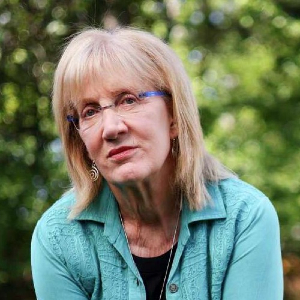
Named as one of the “top 10 religion newsmakers” of 2022, Christa Brown has persisted for two decades in working to peel back the truth about clergy sex abuse and coverups in the nation’s largest Protestant denomination, the Southern Baptist Convention. As one of the first to go public with substantiated child molestation allegations against a Baptist minister—and documentation that others knew—she has consistently demanded reforms to make other kids and congregants safer. Brown has been featured in The Houston Chronicle, Vice, writes for Baptist News Global, and has had numerous mentions in national media. She's also the author of This Little Light: Beyond a Baptist Preacher Predator and His Gang, a retired appellate attorney, a mom, and a grandma. She lives with her husband in Colorado. Follow Christa on Substack.

Contact
[email protected]
6757 Cascade Road SE, #162
Grand Rapids, MI 49546

As an Amazon Associate and Bookshop.org Affiliate, Lake Drive Books earns from qualifying purchases.