
Buy Here: Bookshop | Amazon | Lake Drive | Barnes & Noble | Books-A-Million | Audible | Apple | Google Play
A Thousand Tiny Paper Cuts (Excerpt)
The Subtle, Insidious Nature of Spiritual Abuse and Life on the Other Side
Katherine Spearing, Founder of Tears of Eden
Table of Contents
Foreword
Spiritual Abuse Glossary
To Read Before Reading
One: Power
Two: Control
Three: Collectibles
Four: System
Five: Leaving
Six: Collateral Damage
Seven: Emotions
Eight: Marriage
Nine: Bodies
Ten: Humanity
Eleven: Self
Twelve: Sex
Thirteen: Apologies
Fourteen: Traumaversaries
Fifteen: Religion
Sixteen: Creativity
Seventeen: Laughter
Endnotes
Acknowledgments
TO READ BEFORE READING
On April 10, 2024, I opened applications for a support group for survivors of spiritual abuse through the nonprofit I founded, Tears of Eden. I sent the announcement to the 189 people on our waitlist and monitored the application platform, refreshing my browser every few minutes, with the intention of capping the group at fifteen people.
In less than one hour, we had nineteen participants. This beat the record from the previous group, which filled up in three hours, which beat the group before it, which filled up in forty-eight hours. Survivors of spiritual abuse not only exist, they have an enormous need for education, care, and validation.
One reason such a need exists is due to the complex and covert nature of spiritual abuse. The stories are rarely a sonic boom or climactic explosion. You might not be aware of the abuse at all, which is one of the very reasons the impact can be so devastating—you don’t know anything is wrong until long after the damage is done.
The absolute best description I’ve ever heard on the impact of spiritual abuse came from another survivor. They said, “It’s like a thousand tiny paper cuts until eventually you bleed to death.” A paper cut is frustrating and painful, but no one will rush you to urgent care over it. Nobody will bring you a casserole or write you a sympathy card.
One or two cuts might not be enough to cause alarm, but if you receive a thousand of these cuts over an extended period, eventually these minor cuts will consume your whole body. It’s why when someone asks me, “What exactly is spiritual abuse?” I have to share a few stories, coupled with information about the impact of the abuse and all the work it takes to recover, to really explain it to someone who hasn’t been there. Sometimes, you feel pressure to tell them the most sensational stories just to keep their attention.
This is why spiritual abuse is so complex. Most people want a brief example, something that will turn on the light in their prefrontal cortex, creating an aha moment: That’s spiritual abuse! But a simple definition will not suffice if someone is unaware they’ve encountered it or if they’ve never been exposed to it. Typically, the only way to explain it is by telling a story, which often requires the storyteller to have a personal experience.
I try to explain it by first providing the simple definition they’re often looking for: “Spiritual abuse is anything using God or the Bible to cause shame and harm, but it’s much more complex than that.” Then I tell them a story. I might tell the story from middle school years when my father chastised me for crying over a difficult math problem, telling me I wasn’t trusting God. Shaming a child when they are struggling is emotional abuse. Using God to support that shame? That’s spiritual abuse.
Or I might share a story from when I worked in professional ministry. I was once working for a church where I asked to speak with my boss in order to share how his lack of communication was causing confusion for me. He responded to my request for change with a deluge of barbs and darts. He berated me for two hours, attacking my character and accusing me of disrespect and trying to steal his job. (None of these things were true.) This was emotional, verbal, and psychological abuse. But because we worked for a church—a religious context—and because he used God to back his authority, this was also spiritual abuse.
Some in the spiritual abuse recovery world debate if spiritual abuse is a unique form of abuse or an umbrella term for other abuses. It is my opinion that it’s both, but you rarely have spiritual abuse all on its own. Just like you rarely have physical abuse without emotional abuse or sexual abuse without psychological abuse, other forms of abuse are typically mixed in with it.
Which brings us to a discussion of the definition of abuse. You’ll find many versions on the internet and in texts. I will define abuse as one person or system using their power to take away the agency of another person (or group of people) for self-serving purposes (such as self-gratification, control, financial gain, etc.).
This is where spiritual abuse gets tricky. While many abusers intentionally seek their own gratification by violating another, there are even more people spiritually abusing others while truly believing they are doing the will of God and acting in the best interests of the ones they abuse. You’ll stare into the eyes of someone who you believe is a genuinely good human being, who you love and respect, as they attack your soul and damn you to hell. Good people often abuse other good people in the name of God. These wounds often go far deeper than the ones we receive from people who explicitly want to hurt us.
A helpful lens through which we might view spiritual abuse in Christianity is the lens of family. The institutional church describes itself as family and often becomes a surrogate family or fills gaps left by a family of origin. The impact of spiritual abuse is not unlike domestic abuse, as the damage caused by an abusive spiritual figure is not unlike the damage caused by an abusive parent. Luckily (or perhaps unluckily), I have extensive experience with both.
In this book, I will share examples of spiritual abuse from high-control communities that identify as Christian, which will include examples from fundamentalist Christianity and mainstream evangelicalism. (However, I refrain from drawing attention to any specific denomination, as I believe this abuse is rampant in all of evangelicalism. No denomination is safe.) While I believe anyone who has experienced abuse inside another religious group will glean helpful insights into their experience, I will not explore other religions for the main reason that those religions are outside of my scope of competency. While I studied most major religions in graduate school, I am not a specialist on any religion other than Christianity.
Also, for the scope of this book, I will share many examples from my own life. One of the most validating moments for a survivor is the moment they sit across the table from someone, look them in the eyes, and hear them say, “Me too.” This book is my “Me too” for survivors. Because this book is using my story as the primary example, I acknowledge the stories may not fully resonate with everyone, as I am limited by my experience and various identities, specifically my identity as an able-bodied white woman who can move through the world presenting as cisgender and straight.
Art is an important part of my healing journey and plays a role in recovery for many survivors. I’ll take artistic interludes within chapters to capture the truth in a way that is less direct (but no less true). I hope these interludes will function as an emotional break from a heavy subject.
While I may quote scripture and how it was used to abuse, I will not spend a lot of time dissecting scripture or telling the reader what the verses may or may not actually mean. I will, however, show the psychological and social aspects that create a structure for spiritually abusive religion.
A reader might seek out a book on spiritual abuse looking for a clean-cut list of abusive behaviors, or a book or article with a title like “Five Characteristics of an Abusive Church” or “Four Signs You’re Working with an Abusive Pastor.” This story is not without signs and characteristics with the hope of providing clarity, but I intentionally avoid focusing too much on behavior, as one of the characteristics of an abuser is their ability to modify their behavior to suit the needs of their target community. This book is for the survivors and those who support them. It is not meant to teach an institution how to avoid abuse (or the appearance of it).
While I will be discussing abuse that occurs within a religious context, this is not a religious book. I do not have an expectation for where the reader lands on the religious spectrum. From my professional work with survivors (through Tears of Eden and as a mental health professional), I know many find hope and healing in continued faith of some kind. I know just as many survivors (possibly more) who do not. And then, there are all the folks in between (which is a lovely and legitimate place to explore).
Trauma impacts the physical body and can show up following situations where we felt powerless. For that reason, religion is only helpful if the survivor participates with authentic consent. But religious affiliation is not required to pursue healing. For many, taking an indefinite break from Christianity (or any religion) is an important step in their healing process.
Several years ago, when I was doing research on spiritual abuse and considering starting a nonprofit for survivors (which eventually became Tears of Eden), I encountered a husband and wife who ran a treatment center for folks who had survived cults. Many of these survivors came from Bible-based cults. Some came from gangs. Gangs use cultic methods of coercive control to keep people from leaving. I found the similarities fascinating.
The husband told me we encounter three types of people when we’re telling our stories. One type will believe us immediately. A second will dismiss us immediately. A third type will eventually believe us; they just need a little explanation.
May this book provide language and examples to assist that explanation for the survivor who chooses to tell their story.
Buy Here: Bookshop | Amazon | Lake Drive | Barnes & Noble | Books-A-Million | Audible | Apple | Google Play
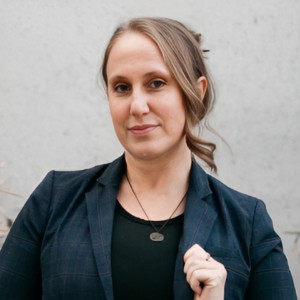
Katherine Spearing, MA, CTRC, is the founder of Tears of Eden, a nonprofit supporting survivors of spiritual abuse and is a Certified Trauma Recovery Practitioner with a Master of Arts in Religion and Cultures. She is the author of A Thousand Tiny Paper Cuts: The Subtle, Insidious Nature of Spiritual Abuse and Life on the Other Side. For five seasons, she hosted the groundbreaking podcast Uncertain, pioneering pivotal conversations around abuse in churches. In addition to working with survivors of trauma and abuse, she is an author, sought-after podcast guest, and advocate for women reclaiming their autonomy after systemic oppression.

Contact
[email protected]
6757 Cascade Road SE, #162
Grand Rapids, MI 49546

As an Amazon Associate and Bookshop.org Affiliate, Lake Drive Books earns from qualifying purchases.