
Buy Here: Bookshop | Amazon | Barnes & Noble | Lake Drive Direct | Books-a-Million | Audible | Apple Books
Bring It Home
The Adventure of Finding Yourself after Being Lost in Religion
Matt Kendziera
Contents
Faith Roots
The Father, the Nun, and the Holy Smoker
Urine Trouble Now
Showing Off
Finding Church
Imperfection
Pride
Grace
Being Good Enough
Don’t Kill Me
Inconsistency
Rethinking Greatness
Expectations
Success
Inclusivity
Forgiveness
Hope
Intentions
Acceptance
Solitude
Loss
How to Believe
Discovery
Conclusion
Introduction
We shall not cease from exploration.
And the end of all our exploring.
Will be to arrive where we started.
And know the place for the first time.
—T. S. Elliot
In the late seventies an event happened that would change the course of history for one small boy in a very large world. One day I was riding my Big Wheel around the block with my older brother in a small town just outside of Madison, Wisconsin, and the next day we were loading up in the back of a red station wagon, heading to a place that would from that point forward carry the title of home. Passing into this new town limits for the first time, I was enveloped in the arms of a community that taught me how to live, believe, doubt, and be. Though I had no idea at the time, that move of less than seventy miles shifted my entire world.
Boscobel finds its place in the world surrounded by rolling bluffs in southwestern Wisconsin, along the Wisconsin River just twenty short miles before it accepts its destiny as part of the great Mississippi. The river, unlike the town’s population, is ever changing. One day you can walk safely from one riverbank to the other, and the next you find yourself being carried downstream, the water denying you any foothold. During my fifteen-year tenure in Boscobel, this river swallowed up the lives of several young people who made the grave mistake of believing she would be the same today as she was yesterday. I was spared, but I eventually saw a metaphor in it that helped me survive making a similar mistake in my spiritual life. We all get too comfy with what’s familiar, one way or another, in life and faith. I’ve seen more than one person get swept away for not appreciating the shift in their reality, and I’ve been the guy desperately hoping my feet might find something firm enough to stand on again. There was a time in my life when I was confident I had the answers to so many of the big questions faith asks. I’ve had to admit my faulty thinking, and instead of giving up on God and faith altogether, I’ve decided to rethink the foundation on which I stood.
Boscobel has some rich history. It can be thanked for those Bibles in the top drawers of every hotel you have stayed in. Some travelers once met in the now historic and broken-down Boscobel Hotel, not knowing that their chance meeting would be the conception of a dynamic organization called The Gideons International. If you have ever been handed a pocket-sized Bible at a park, on a street corner, or on a college campus, you likely have met a Gideons distributor. As people pass by the sign indicating the Boscobel town entrance, boasting a population of 2,662, it is easy to miss the faded announcement proudly declaring the self-appointed and hotly disputed title of “Wild Turkey Capital of Wisconsin.” (Incidentally, this was the claim that sent my grandfather into the woods with a gun for the final time, when what he thought was a turkey turned out to be another man. We are all thankful that the victim survived, but grandpa’s freedom to carry rifles did not.)
When I speak to groups of people in my home state, I often ask how many have heard of this little town. There is always a smattering of hands that go up, and on the rare occasion a small “whoop” from a person who has some sort of connection. To most it is irrelevant and unknown. To some it is a place they drive through on their way to somewhere else. A select few call it home. But to me Boscobel is the capital of the world, my first love, and the architect and designer of who I have become. It is the place where I clumsily began to stack the building blocks of myself and my beliefs. Though many of those blocks have been changed out over the years, it is and always will be where I go back to whenever I need to rebuild. Whether in faith, relationships, or anything else, heading back to where it all started has always been my key. This book is not a story of a town, but of a boy who grew up wanting nothing more than to leave. This is exactly what I did the moment I graduated from high school, and ever since that moment I have been trying to find my way back.
I do not recall a time in my life when spirituality and the idea of God wasn’t important to me. This is something I can trace back to those early days growing up in small-town America. It’s as if faith is built deep within my DNA. From as far back as my memory goes, I can find a desire for whatever it is that’s out there beyond what we can see, think, or imagine. I also recall always knowing that somehow I could engage with the divine, that it was part of me and I was part of it. On some level, I believe, everyone is born with an understanding of and a connection to the divine; some eventually find language for it and some do not, based on our surroundings and influences.
As early as I can remember I had people in my life who were tasked with the impossible position of teaching me about God. Who is this God? How do we understand this God? How do we appropriately engage with this God? Since we were Catholics, my parents gladly passed on that responsibility to the experts, which in our case were the priest and my Catholic school teachers. Later in life this transferred to some older friends and then evangelical pastors, authors, and mentors. Everyone who attempted to teach me about God believed they were right. They believed that somehow they had an inner knowledge and understanding of this supreme being of the universe. They would speak with conviction and a desire for others to think the same way they did. It was as if the goal was uniformity— that there was a right and wrong way to believe.
As I began to look at religion throughout history, I found an unsettling theme. People of faith have always believed they were right about something that it is impossible to be right about. There can be no universal certainty in our understanding of God because the divine was never meant to be completely understood, only experienced. Sure, we can learn about faith and religion from pastors, priests, and authors, but at the end of the day we are all simply putting words to our experiences. And all our experiences are unique, which should, hypothetically, lead to a faith culture that reflects that.
If I have this deep desire for spirituality, yet I am surrounded by people who believe they are “right” about how that works (and history shows they likely are not), what am I left with? I am left with the place where it all began. I am left with myself. What if the only true place to discover God is within myself? What if the story of divinity is not rooted in ancient letters and writings but in the story of my life, and yours? Maybe the goal should not be a uniform belief system, but a faith that is uniquely our own. Maybe the goal is not for others to understand how or what we believe, but simply to see the results of our beliefs through living our lives. Not that we are the only expression of God, or that we should turn toward humanism or a “new age” ideal. But our belief should be rooted in the way we see the authors of the Bible and even Jesus himself living out their faith.
I grew up as a jazz drummer, and jazz music is something I love to this day. A jazz tune will start with the part that everyone knows, often called the head. After playing through the head a time or two, the musicians begin trading improvised solos over the chord pro
gression of the tune. This can go on for quite some time, and eventually, whether the band leader calls it out or whether everyone just knows it ahead of time, there comes a point when the group has to bring it home. They have been artfully wandering around the form of the tune, and to get to the end they have to bring it back to the point it began. I have been artfully wandering around a theme of spirituality for quite some time now. And like in a lot of jazz music, there have been a fair number of moments when what is happening simply does not make a lot of sense. So instead of wandering endlessly, jumping from church to church, theology to theology, book to book, maybe it is time for us to bring it home. Time to find a place that actually makes sense. It’s time to discover the divine right in the center of our own story.
For a while now I’ve sensed that the quest to discover God may best begin by rediscovering myself. I don’t want to return to Boscobel as much as I desire to return to the foundation it built: a faith that was developed not through learning, but by living. To return to a God I found in the woods, not in a church. The pages that follow tell my version of a story that everyone has. It’s a story of becoming who we were meant to be by tracing the clues laid out along the way. It’s a story of discovering faith not through religion or church but through experiences, relationships, joy, sorrow, success, and failure.
We live in a world that attempts to tell us how to act, who to be, how to live, and what to believe. Social acceptability trumps dreams and desires most of the time. We care so much about how others view us that we carefully craft a false narrative so we will be accepted by those whom we desire to see us. When we are young, we are told we can do anything and become anyone. We are encouraged to dance, sing, and play. By the time we reach adulthood, we are told that being ourselves matters only if it fits the construct we are in. And if you follow along with what is expected of you, you will gain a lot but will almost certainly lose yourself. For me this showed itself primarily in the evangelical church, an institution that taught me I can be loved as long as I become less liberal, ask fewer questions, and accept only a select group of people. Unfortunately for me and for many around me, I chose this path for nearly two decades, knowing deep inside that I was losing more of myself every day. As I have spoken to people across the globe, I have discovered that I am not unique. Many of us have spent large portions of our lives trying to find acceptance by sacrificing our true beliefs. What if we all decided to try a new approach—one that is more authentic, honest, and messy? What if we took down the masks, grabbed the hand of the doubter next to us, and truly stepped forward in faith?
Digging myself out of the hole I allowed myself to be buried in is a process I am still in the middle of and may be for some time yet. But this book is an attempt to unearth the true and authentic parts of me. Much like my story, your true self and authentic beliefs may be buried pretty deep. What used to be so natural now may feel elusive or even absent. This book is a prayer that through my journey to find home you will find your own. I trust that you will at the very least be amused by the life I have lived and the people I have met along the way, but I beg you not to find yourself wishing it were your own. Instead, I hope it drives you to an invigorating exploration of your own story of life and faith. You were created for a very real and meaningful life and a deep connection to the divine. Digging up what has been buried can be the most thrilling adventure!
This book will not give you a blueprint to follow for having a fulfilling life. You will not find three steps to inner peace. You will simply find an ordinary story of a boy from somewhere you have probably never been, who has done things you likely have never experienced, with people you will almost certainly never meet. Yet as you journey with me, my desire is that you peel away the layers of who you are “supposed” to be to discover who you truly are. And that you can replace what you were told to believe with what you know to be true.
The big red station wagon pulled up to a dark brown duplex on the edge of town. I opened the door, stepped out of the car, and looked around. In front of me was a winding and adventurous path that would include all the people, things, and experiences that tell the story of who I am, and who I am becoming, while helping me to discover the reality of the divine that resides in the place it never left.
1 Faith Roots
Growing up happens in a heartbeat. One day you’re in diapers; the next day you’re gone. But the memories of childhood stay with you for the long haul. —The Wonder Years
A common thing we do with kids in our lives is ask them what they want to be when they grow up. It’s not so much that we are asking them to create a career path by age five, but it’s to discover what gets them excited. Kids are naturally drawn to fascinating things, which often makes their choices quite interesting. Many opt for construction workers, princesses, firefighters, or doctors. But none of those options were interesting to me, which is why adults who asked me that question got a nice little surprise.
If you are as shallow as I am, one of the determining factors in choosing whether to read a book is what the author looks like. I see a book that looks and sounds interesting, flip through the pages, and ultimately turn to the back cover to take a gander at the writer’s picture. I have apparently decided what I want the person who speaks into my life to look like. If I am going to be fully transparent, that person usually has to look a bit like me, or at least a bit like someone I would want to hang out with. For example, if the author is wearing a suit and tie, the odds of me reading the book are minimal because, at the moment of writing this, I do not own a single suit. I must say I am extremely thankful for my less judgmental friends who have recommended books by people who do not look like me. I will always put recommendations above personal biases, which has led me to some incredible reads! I guess you could say I do indeed judge a book by its cover; the back cover, that is. If you peeked at the back cover of this book, which I bet you have (or at least I choose to believe you have so I don’t feel like the only shallow one in the room), you can see that I am very tall and very thin. Some would use the word scrawny to describe me, but I choose slim as my desired adjective. My father is Polish and my mother is Czech, giving me very dark hair and a prominent nose. I’d suspect you decided to read this book because you know me, because you have a connection to my hometown, or because that picture somehow connected with you. The last one leaves me with a lot of questions about you.
One of the first trips I ever took with my family growing up was to a spectacle of a town called Wisconsin Dells. This is a place known worldwide for its plethora of water parks and random attractions. Huge water slides, strange gravity-defying buildings, vehicles that can drive on land and float through water, waterskiing stunt groups, and odd dome-shaped buildings are included in the eclectic variety of entertainment found in this young person’s wonderland. As interesting as all these things were to me, there was one part about the town that grabbed my attention more than anything else. I walked into a gift shop and was immediately surrounded by Native American head dresses, moccasins, arrowheads, and jewelry. Seeing photos of warriors and chieftains made all the waterslides and attractions fade far into the distance. In this gift shop, surrounded by cheap T-shirts and inappropriate coffee mugs, I discovered what I was going to be when I grew up. I was going to be a Native American! For some reason no one felt it important to explain to me that heritage wasn’t a choice and that I couldn’t stop being Polish by wearing a loincloth.
So for years I was convinced that my future, or should I say my destiny, included teepees, horses, moccasins, and face paint. I even went so far as to cut up one of my dad’s deer hides that was stored in our basement to create some Native American wearables. I would dress up and run through the forest surrounding our land looking for cowboys to battle and adventures to be had. When I would sit with my grandfather watching old Westerns, I always rooted for the Native Americans even though I knew they were destined to lose, both in the movie and in the reality of our current culture.
Although I am impressed that my parents were able to hold out as long as they did, they ultimately took up their position as dream killers by explaining to me that being a Native American was not a valid career choice. Away with the moccasins, away with the loin cloth, and away with all my hopes and dreams for a bright future. I wiped the tears from my eyes, lifted my chin, and started to look for a different career option.
Around this time, I began to attend a Catholic grade school and was becoming fascinated with everything religious. I had attended the Catholic church since the day I was born, but going to school at a place attached to the church broadened my interest even more. The beautiful stained glass, the fascinating statues, the odd concept of drinking someone’s blood and eating their flesh—who wouldn’t find that appealing? All these things, along with the mystery of religion, were intriguing, but the greatest thing about the church and the school was the man at the top of the hierarchy. At Immaculate
Conception Church this man’s name was Father Pat. He was living the dream!
First of all, he got free rein over all the cool stuff. He actually lived right next door in a building attached to the church called the rectory (which always sounded unfortunate to me) and could go into the church any time he pleased. Everyone called him Father even though he wasn’t actually a dad and therefore didn’t have to deal with any actual children. Everyone believed he knew all the deep inner realities about God, and no one ever questioned him. He got to wear all these spectacularly colorful robes, sprinkled people with holy water, smoked the place out with incense once in a while, and was the one guy who hypothetically could see the wine and water turn into blood. To top it off, a Catholic priest is not allowed to get married, which to the ears of a first grader sounded pretty damn great! If I couldn’t be a Native American, then off to seminary for a life of masses, blessing people and animals, drinking wine, giving last rites to the dying, and being single!
One summer day my brother and I were outside playing when I came up with an extraordinary idea. I went into my dad’s closet and grabbed his bath robe. I then headed to my room to grab my toy record player loaded with “Camptown Races.” If you grew up in the seventies or eighties, you had this record player as well. The records were plastic with little notches that magically played music when the needle moved across them. Then off to the kitchen to grab a box of Nilla Wafers. I summoned my brother and told him we were going to mass. He hated church with the same passion with which I loved it but decided to go along with it because it was something to do. We headed outside (we were a progressive outdoor church), and I put on the robe, cued up “Camptown Races,” and served Communion to my congregation, which consisted of, well, just my brother. Luckily, he enjoyed Nilla Wafers, so I was able to convince him to consume several pieces of Jesus’ body in sugary wafer form. I traded in my loincloth to become a man of the cloth. This was it! I had found my calling. That is until we got a real record player and I listened to Michael Jackson and John Bon Jovi sing about girls in a way that made me feel a lot less interested in celibacy. So long crucifix, hello sex and rock and roll!
I am confident that I am not the only kid who had some interesting and strange ideas for the “What do you want to be when you grow up?” question. For years I brushed this part of my life off as simply a story that I could share with my kids one day and laugh about. A cute story about a kid who didn’t know much about anything. But the more I shared the story, the more I began to connect with it. As I found myself thinking a lot about this early part of my life, I started to wonder why I was drawn to the things I was.
We are quick to dismiss kids’ dreams and ideas as cute, believing that they will fade or go away when they realize they are Polish or attracted to girls. But the unique reality about this time in our lives is that we are not clouded by what others expect of us. No one is concerned about social acceptability, and no one is trying to encourage us to make a decision based on safety, security, or monetary gain. This is one of the only times in our lives when we are given the liberty to think and believe anything we want to, even if it doesn't make sense in the context of the world we live in.
The truth is, I was and still am very much a “Native Priest.” Once I realized that, I gave myself permission to explore the career path I first desired. Sure, I could never become a Native American, and the priesthood was not in the cards for me, but I connect very deeply with what those two figures stood for in my mind, in my heart, and in my soul. The Native American is the part of me that loves and
honors nature. My greatest joy and clarity come when I am surrounded by it. Being in a kayak on a river helps everything make sense. The forest helps me feel connected. Riding my bicycle down an old country road brings me joy I could never explain in words on the pages of a book. My young perception of a Native American also speaks to my constant craving for adventure.
I am an Enneagram seven, an “enthusiast,” which means that for me, the best idea is always the next idea. I have shared with my family that I have no plans of retiring, and I plan to skid to a stop with a smile on my face when I die because I can’t imagine a life that doesn’t involve the adventure of the next idea, project, or plan. The poet Atticus once said, “I want to arrive at my funeral late, in love, and a little drunk.” That describes me well! People have said a lot of things about me over the years, including but not limited to calling me the Antichrist, but no one has ever been able to accuse me of settling for ordinary or lacking bravery.
People who haven’t seen me for a while often start by asking, “What are you up to now?” instead of “How are things going?” My parents call me an “entremanure” because “he does all sorts of shit.” For my birthday I rarely ask for any gifts but almost always give myself the gift of enjoying nature by myself by taking a walk in the woods or floating down a river. Adventure and nature make me feel more alive and more myself than anything else. If I am in a shitty mood, the answer is always the same—go outside or come up with a new idea!
In the same way that the Native American represents adventure and movement to me, the priest represents wonder and connection. Father Pat represented a world filled with spirituality, where everything meant something. Everything he wore had meaning: the colors, the symbols, every little statue and relic—all of it represented
something divine. The priest in the Catholic tradition is the one with a direct connection to God. As much as I loved the robes, the bells, and the incense, what I desired then and desire now is a direct connection to the divine mystery of the universe. My six-year-old brain put two and two together and was convinced that the best chance of this was through the priesthood.
I have met a lot of people in my life who like to put a date on the moment they began believing in God. This for many is called “salvation” or “conversion,” two words that make me cringe because they represent so much that feels contradictory to what the divine rep resents. I want to honor everyone’s journey, but this is something I struggle with because of the exclusive environment it inherently creates. Salvation becomes the card that members must hold to truly belong. Jesus seemed to care very little, if at all, about the “salvation” of the lepers, the poor, or the thief on the cross. He simply met their needs, encouraged them to keep quiet about what was happening, and let them know it was all going to be okay.
My connection to God goes as far back as I can remember. It is something I felt in the walls of Immaculate Conception Church, but no more so than what I felt sitting on a hillside looking at the Wisconsin River valley. I have experienced this connection in crowds and by myself, in tears and in laughter, in pain and in healing, in Christianity and in paganism, in belief and in doubt, in love and in hatred.
The big things in life certainly hold meaning, but not more than the small things. The divine was profound in the moments when mine were the first human hands to touch and hold my daughters, and the divine is profound when I take the time to smell the crisp morning air. The divine is present and obvious in a passionate kiss and also in a slight touch. The universe has a way of opening itself up to us both in the midst of a meteor shower and with a gently falling snowflake. Life is not full of answers, but it is full of wonder and mystery! The divine is just as much in the mundane as in the majestic. The great mystery of the universe is seen just as clearly in the eyes of an inmate as in the work of a clergy member.
I never fell for the lie that Father Pat was somehow all-knowing or divine himself. The door from his home directly to the church gave him unlimited access to a lot of really shitty wine. Living alone with that sort of availability leads to obvious realities that I could never blame a human being for. His alcoholism showed him to be just as human as the rest of us. But I loved that he was willing to give up so much in order to experience the mystery of faith from a front row seat.
Although the Native Priest has tried to hide many times, he is alive and well in me today. He refuses to bend his knee to authority yet willingly bows at the feet of mystery. He wakes up with a boyish excitement in his eyes, and as he combs his now thinning hair, he would much rather be smearing war paint on his face. He sees God in the eyes of his kids, senses the universe speaking to him while framing up a basement wall, and certainly senses divinity while enjoying a bourbon in a pottery cup while sitting on the front porch. And as he buttons up his shirt, he silently wonders what it must feel like to button the top button before sliding in a stiff white collar. As he puts on his buffalo plaid red wool coat, he feels the thick cloth of priestly robes fall over his shoulders.
As I ponder the Native Priest, I am reminded that we don’t just get to experience the divine from afar; we also get to experience the divine from inside ourselves. In our most true and authentic spaces we will find it. In our most raw and vulnerable realities we will experience our life as a part of the greater whole. I find it fascinating that Jesus spent most of his documented life in the streets, in the wilderness, and in the homes of those he interacted with. There was a time when one of his followers stopped him and turned his attention toward the buildings of the temple, the place where God was thought to be contained. Jesus didn’t turn and walk back toward these “spiritual” places. He made a smartass comment and kept walking in the other direction (Matthew 24:1–15).
Over the past three decades I have been attempting to follow the footsteps of the Native Priest, but over and over again I’ve become distracted by the buildings and the organizations around me. I have been encouraged to follow the rules, pick and choose who is in and out, vote Republican, and believe that “pro-life” is somehow limited to the unborn. The reason Jesus walked away from all that bullshit is the same reason I have. It’s because there is no wonder found there. It’s because there is no adventure found there. And the only God in my mind who is worth following is one who runs through the forest and dips his toes in water at the river’s edge. The God I desire to follow sits not on some fancy throne in heaven but on a wobbly chair at an old kitchen table. In what sort of alternate universe does it make any sense to honor Jesus by doing the things he never bothered to do?
A number of years ago the Native Priest walked out of a building with big crosses, video screens, fresh coffee, loud music, and polo shirts. He found where his loincloth had been stored (figuratively, of course, for the sake of all those around) and walked back into the wonder and adventure of the divine. This space is wide open with no boundaries. It’s a space where I am no longer told what to believe, but where I get to believe what I experience. The good, the bad, the lovely, the heart-wrenching, and in all of it . . . the mystery.
Bring It Home
As we take this journey back home, an important place to start is the place we began. How will we ever expect to get home if we don’t identify where home is? Sure, adults ask kids, “What do you want to be?” question to hear a cute or funny answer, but there is some truth behind whatever the answer is. Once we begin to grow up, factors such as societal pressures, money, and socioeconomics cloud our truest desires. When we are young, we consider none of these things, which means the answer that came out had a sense of authenticity.
Our journey back home needs to begin as far back as possible, when there are little to no obstacles. When you were asked that question, what were some of your earliest answers? As odd or crazy as it may seem now, is there any truth that can be found there?
Maybe you wanted to be a teacher because you are a person who loves to learn. Maybe you wanted to be a doctor because you have a desire to help others. Was it a farmer because you love the land, animals, or nature? It is possible that you wanted to be whatever it was because you admired someone who did these things, like a parent or a family member. That is not a bad thing. It shows that you had people to look up to in your life. But for this exercise, do your best to think of the things you desired that were unique to you.
Once you identify what you wanted to be when you grew up, ask yourself if you resonate in any way with that profession now. Not literally, but figuratively, like the Native Priest. My hope is that you will resonate with it deeply and in profound ways. But even if you can’t think of what you wanted to be when you grew up, think about what kind of kid you were. Is that kid still alive in you now?
Odds are good that much of that wonder-filled child has been squeezed out of you over the years. We are told we can be anything, and then eventually we are informed that this was a cold-hearted lie, just like Santa and the Easter Bunny. To find our faith again, the first step is to discover who is trying to find it. If you attempt to find it as the shell of a human, this world has made you to be what you will find is a shell of the faith you desire. It might look good at first glance, but just like a chocolate Easter Bunny, a bag of Skittles at the movie theater, or most hospital dramas on television, you will discover it to be hollow and lacking once you get into it.
I hate that in our culture, when people meet each other for the first time, one of the first questions we ask is, “What do you do for a living?” We are forced to then share our job positions, as if they’re the same as our identities or even the things we resonate with. A better question would be, “What did you want to be when you were young?” or “What makes your heart come alive?” or “What is your biggest passion in life?” Step one in discovering the divine is to discover yourself. It’s no wonder the church and evangelical Christian
ity failed me. It wasn’t created for me. The Native Priest doesn’t belong in a building being told by men in khakis how to think or what to believe. The Native Priest belongs in the wilderness. He finds God on the streets, in prisons, in schools, and in nature, not in a cozy chair, singing along with lyrics on a screen, with a nice cup of coffee in one hand and the other raised. He doesn’t respond to four-on-the
floor drumbeats and thick synth pads; he worships through pipe organs, gritty folk music, and rhythmic drumming. We will find God in the same place we first found ourselves.
Buy Here: Bookshop | Amazon | Barnes & Noble | Lake Drive Direct | Books-a-Million | Audible | Apple Books
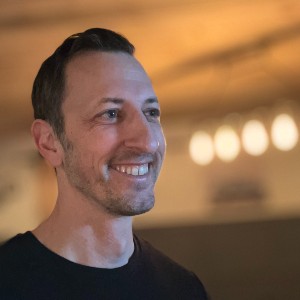
Matt Kendziera is a full-time speaker, podcaster, writer, and creator. He is the host of the Chasing Goodness podcast, engaging authors, activists, and influencers on questions that most people run from. He’s also a collaborator with several other incredible organizations such as Fierce Freedom, Rachel’s Challenge, Ashoka, Soularize, Celtic Way, and others. Matt currently lives in rural Wisconsin with the love of his life, Suzie, and his two teenage children. Learn more and follow Matt at mattkendziera.com.

Contact
[email protected]
6757 Cascade Road SE, #162
Grand Rapids, MI 49546

As an Amazon Associate and Bookshop.org Affiliate, Lake Drive Books earns from qualifying purchases.